Your reputation needs watching
🔔 Why you should set Google Alerts, and why performance alone is no longer enough.

Hey there 🧠
Ready for another day of staying ahead of the competition in the Growth race?
Oh and before we go ahead! If your friend sent this to you, be sure to subscribe here! So you don’t miss out on any editions.
Partnership with Moton
Creative Strategy is the last AI-proof edge.

Creative Strategy is not optional anymore. It is the leverage point in paid social, and the teams winning in 2026 already know it.
Most marketers are still guessing through creative, while performance gets harder and the bar keeps rising.
Motion’s Creative Strategy Bootcamp is a free, 8-week live program built to help you stop hoping and start building ads with intention.
No prerecorded lessons. No influencer fluff. Just hands-on training from active Creative Strategists working on brands like Calm, Harry's, Happy Mammoth, and more.
- You will spend 70% of the program doing the work: hooks, concepts, launches, reviews, iteration.
- You will move through Foundations → Sprints → Masters, so progress feels practical, not theoretical.
- You will get live classes, office hours, and a private community to sharpen your thinking weekly.
This is live every Tuesday at 1 PM EST, with recordings shared within 24 hours. Seats are limited, starts on March 17th.
💡 A Reminder To Set Up Google Alerts For Your Brand
Reputation rarely collapses overnight. It erodes quietly when no one is watching.
Google Alerts is a simple, free monitoring tool that takes minutes to set up and can save you from missed mentions, PR blind spots, and competitive surprises.
1️⃣ Start With The Right Account: Visit Google Alerts while logged into your business account, not your personal one. This ensures notifications are archived properly and accessible to your team instead of getting buried in personal inbox clutter.
2️⃣ Set Core Brand Alerts First: Enter your exact business name in quotation marks to filter irrelevant results. Add variations, common typos, product names, and your founder’s name. If people are talking about you, even imperfectly, you need visibility.
3️⃣ Customize Frequency And Filters: Click Show Options to adjust alert frequency. Choose As it happens for reputation-sensitive industries, or Daily digest for manageable monitoring. Selecting only the best results helps reduce noise and spam.
4️⃣ Build A Small Alert Framework: Start with five to seven essential alerts to avoid overwhelm. You can expand later, but this creates a strong baseline without flooding your inbox.
5️⃣ Review And Optimize Weekly: Refine alerts by adding negative keywords if you receive irrelevant mentions. Once stable, expand into competitor monitoring. Track pricing changes, reviews, and media mentions to anticipate market shifts.
Why It Matters: Google Alerts helps you catch unlinked mentions for outreach opportunities, respond early to negative feedback, and stay aware of industry chatter. While it does not monitor private conversations or analyze sentiment automatically, it remains a fast and practical first line of defense.
The Takeaway
Monitoring your brand should not feel optional. Google Alerts offers a simple safety net that improves visibility, protects reputation, and opens new opportunities with minimal effort. Five minutes of setup can prevent months of damage.
💡 It Is The Year Of Brand Building
Insights from stackedmarketer
For years, brand marketing was treated as optional. The first budget line to disappear when pressure hit.
That mindset is shifting fast.
A significant share of marketers are now reallocating spend toward brand and upper funnel activity in 2026. The numbers tell a clear story. Over forty percent plan to increase investment in brand building.
Only around twenty percent are doubling down on pure performance and bottom funnel growth. Customer retention sits lower, and product innovation is even less of a priority. A small percentage expect their budgets to shrink overall.
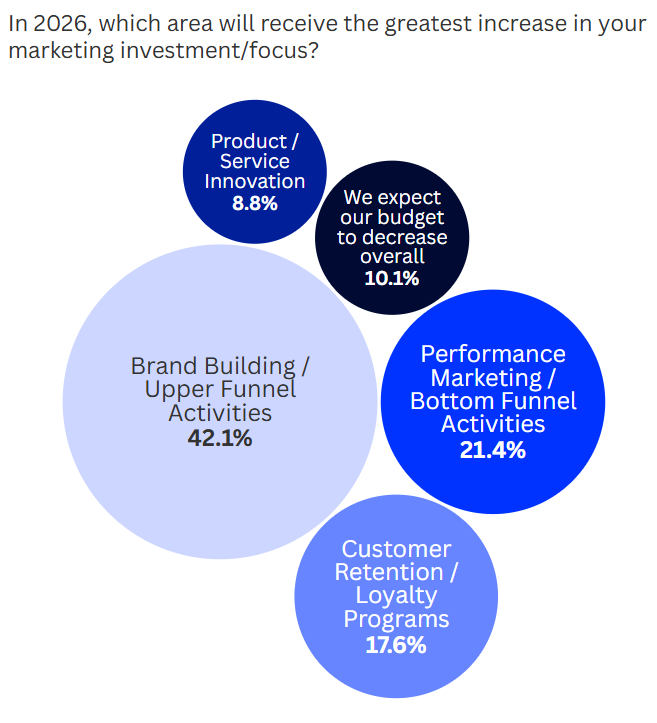
This is not random. It reflects a strategic pivot.
1️⃣ Performance Channels Are Saturating:
As acquisition costs rise and competition intensifies, simply pushing harder on performance ads yields diminishing returns. You cannot outbid competitors indefinitely. Efficiency has limits.
2️⃣ Mental Availability Is The Real Moat:
Brand building increases familiarity and memory structures. When buyers enter the market, they choose what they recognize. Performance captures existing demand, but the brand creates it. Without brand investment, performance eventually runs out of fuel.
3️⃣ Rebalancing Is Not Optional:
If your roadmap is still overwhelmingly performance-driven, it may be time to ringfence budget for brand initiatives. Distinctive, creative, consistent messaging and channels that build memory over time compound in ways that short-term campaigns cannot.
4️⃣ Long Term And Short Term Must Work Together:
Strong performance marketing converts attention efficiently. Strong brand marketing ensures that attention exists in the first place. The most resilient strategies blend both rather than swinging to extremes.
The Takeaway
Brand is no longer a luxury. It is a strategic defense in a crowded market. As acquisition becomes harder and channels more competitive, investing in memory, positioning, and distinctiveness is how brands create durable growth. Performance converts demand. Branding creates it.
As we prepare more "Growthful" content, we'd love to hear your thoughts on today's edition! Feel free to share this with someone who would appreciate it. 🥰