Why Strong Visuals Win
🎯 See how brands can use visual memory to stand out, then see why earned AI visibility may outperform forced paid placement.

Hey there 🧠
Ready for another day of staying ahead of the competition in the Growth race?
Oh and before we go ahead! If your friend sent this to you, be sure to subscribe here! So you don’t miss out on any editions.
In Partnership with SurveyMonkey
SurveyMonkey Will Do the Research for Your Next Campaign
Before you approve the next campaign, find out whether buyers respond to its message. That feedback is far more useful while you can still change the creative.
SurveyMonkey does the research work for you. Set up your study and select your audience. It handles paid-panel recruitment and automatically analyzes the responses.
- Compare up to 10 messages with your target audience to decide which deserves your campaign budget.
- Get your creative evaluated against industry benchmarks, with findings that show what needs improving before launch.
- Discover which product benefits buyers prioritize, so your ads and landing pages emphasize what matters to them.
With a multimillion-dollar Super Bowl campaign at stake, ClickUp used SurveyMonkey to test its ad with 5,000+ people in less than a week before choosing which version to air.
Give your next creative brief customer evidence your team can act on before production and media costs are committed.
💡 Why People Remember Pictures Better Than Words
Think about the last billboard you noticed.
You may remember the image clearly while struggling to recall the exact headline underneath it.
That’s the Picture Superiority Effect: the tendency for visual information to be remembered more easily than text.
Here’s how brands can use it.
1️⃣ Let The Visual Do More Work: Airbnb learned early that poor imagery could quietly hurt conversions.
When the founders began improving listing photography, bookings increased significantly. The lesson was simple: people find it easier to trust and imagine a product when they can clearly see it.
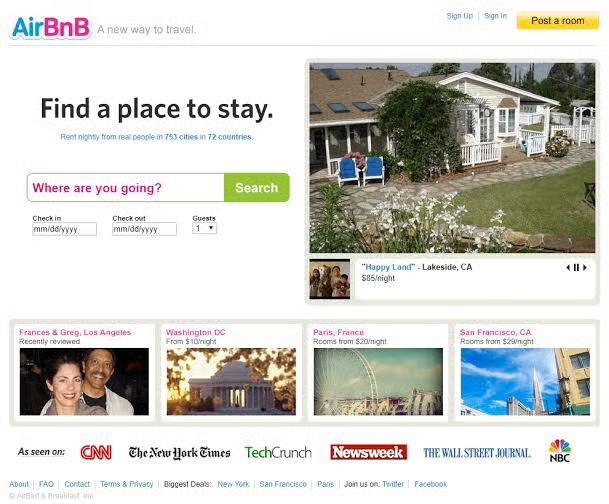
For marketers, strong visuals can often communicate value faster than another paragraph of copy.
2️⃣ Build Distinctive Visual Assets: Strong brands don’t rely only on names or slogans.
Heinz tested this by asking people to draw ketchup. Most participants naturally drew something resembling the brand’s familiar bottle and label.
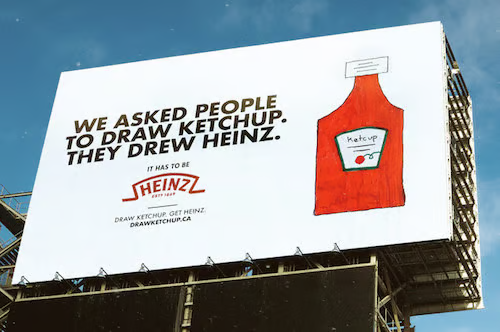
That kind of recognition comes from repeatedly using distinctive shapes, colors, packaging, and visual cues until the audience connects the category with the brand automatically.
3️⃣ Show The Outcome Instead Of Explaining It: Product claims are easier to understand when people can see the result.
Blendtec demonstrated this with its “Will It Blend?” videos, showing its blenders destroying objects like golf balls, marbles, and electronics.
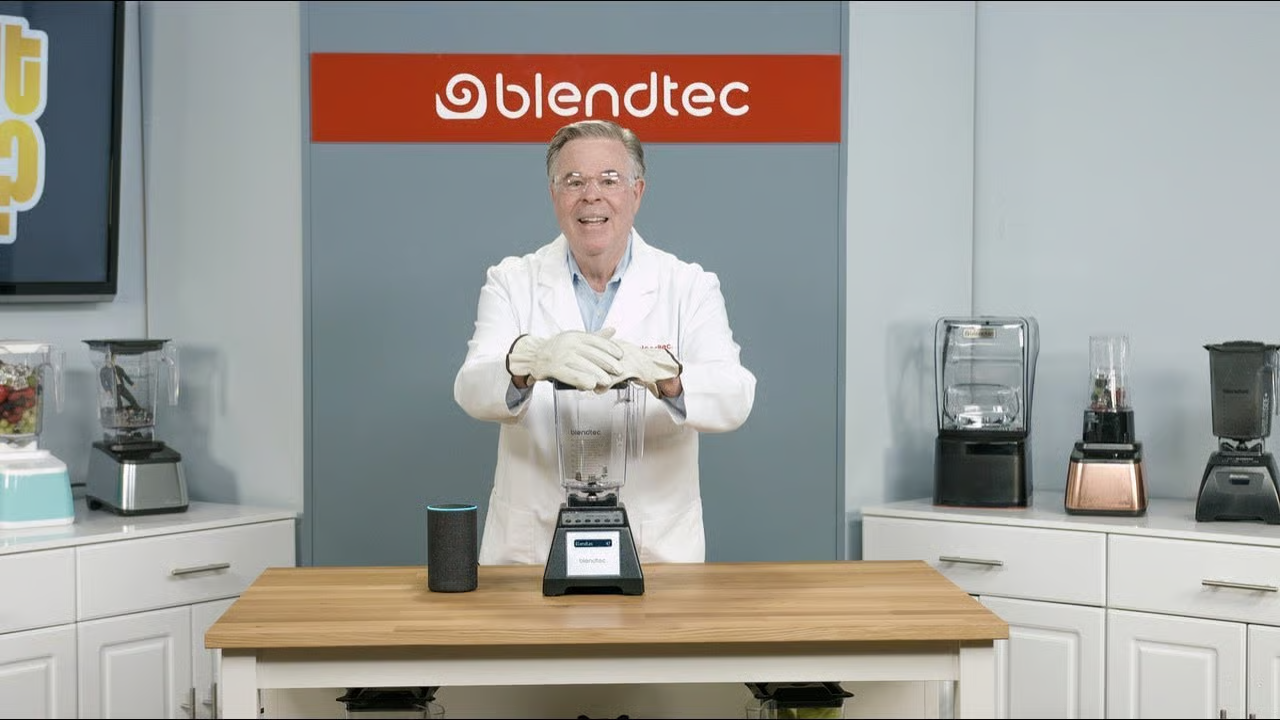
Instead of describing power through specifications, the company turned the product benefit into something instantly visible and memorable.
4️⃣ Reduce The Cognitive Load: Dense copy forces audiences to interpret the message before they understand it.
Images can communicate context, emotion, and outcomes almost instantly. When visual and verbal information work together, the message becomes easier to process and easier to remember.
5️⃣ Use Visual Proof Where Possible: Before-and-after comparisons, demonstrations, customer photos, diagrams, and product-in-use imagery can all make claims more tangible.
The stronger the visual evidence, the less work your audience has to do to understand why the product matters.
Why It Works
Images are processed as both visual information and conceptual meaning, which gives them a stronger chance of being retained in memory.
That makes visuals especially powerful when the goal is to communicate quickly, build recognition, or make a product benefit easier to understand.
The Takeaway
People don’t always remember what brands say.They remember what brands show. Use visuals to make the message easier to process, easier to recognize, and harder to forget.
💡 Consumers Don’t Fully Trust Ads Inside AI Search
Paid placements inside AI-generated answers may look like the next big advertising opportunity.
But early consumer sentiment suggests the format has a trust problem..
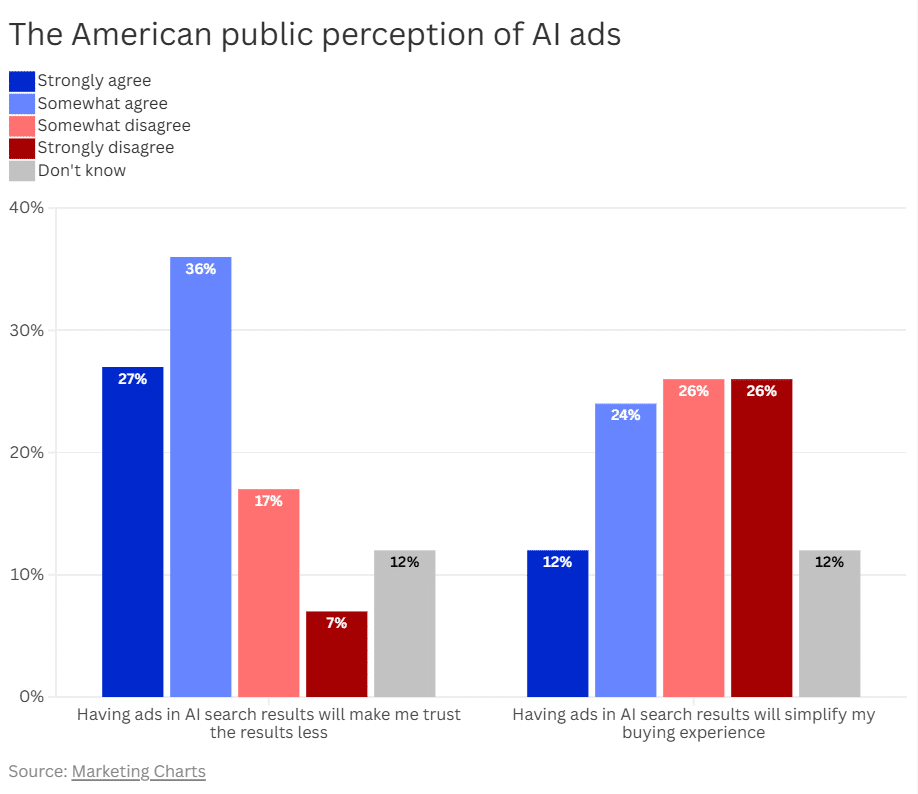
Here’s what the data shows.
1️⃣ Ads Can Reduce Trust: Around 63% of Americans say ads inside AI search results make them trust the output less, with 27% strongly agreeing.
That matters because users often approach AI tools as neutral assistants. Once sponsored recommendations appear inside the answer itself, that perception can change quickly.
2️⃣ Convenience Isn’t Winning People Over: More than half of consumers surveyed, 52%, disagree that ads inside AI search will make shopping easier.
Only 36% believe the format could improve the buying experience, suggesting that paid placements still feel more intrusive than useful.
3️⃣ AI Search Has Different Expectations: Traditional search users are already accustomed to seeing sponsored listings.
Conversational AI feels different. People often expect a direct, unbiased answer, which means advertising inside that response can create more skepticism than the same ad would in a standard search engine.
4️⃣ Forced Placements Can Backfire: If users begin questioning whether an AI recommendation is useful or simply paid for, the credibility of the entire answer can weaken.
For brands, that means visibility alone may not be enough. The placement also needs to feel relevant, transparent, and genuinely helpful.
5️⃣ Earned Visibility May Matter More: Instead of relying only on paid placements, brands can strengthen their chances of appearing organically in AI answers.
That includes publishing detailed product documentation, useful comparison content, authoritative PR, and clear information that AI systems can confidently reference.
Why It Works
AI search is built around trust.
Users want answers that feel useful and objective. Brands that earn citations naturally may therefore create stronger credibility than those that simply pay to appear inside the response.
The Takeaway
AI search may become a major advertising channel, but trust will shape how effective those ads actually are.
For now, brands should focus not only on buying visibility, but also on earning it.
As we prepare more "Growthful" content, we'd love to hear your thoughts on today's edition! Feel free to share this with someone who would appreciate it. 🥰