Why Brands Stay Invisible
🤖 While AI rewards consistent positioning, shoppers reward brands that stay fresh.

Hey there 🧠
Ready for another day of staying ahead of the competition in the Growth race?
Oh and before we go ahead! If your friend sent this to you, be sure to subscribe here! So you don’t miss out on any editions.
In Partnership with Stack Influence
Stop renting Amazon visibility. Start building a rank you keep.
Every dollar of PPC buys you a moment of visibility. Stop bidding, and your rank slides right back. You are renting, not building.
Here is the alternative play: when real shoppers discover your product outside Amazon and buy it, the algorithm reads that external traffic as genuine demand and rewards it with an organic rank that sticks after the campaign ends.
Stack Influence makes that engine repeatable. Send free product to vetted micro-influencers; they buy on Amazon, post authentic content to their own audiences, and drive the outside traffic that moves your listing. No cash fees, no manual outreach.
The results: one product activated 187 influencers and saw BSR improve 11X and recurring sales 8X, worth $342K YoY. Another went from zero to $150K a year and an Amazon's Choice badge on 291 creators. It is the same model behind growth at Magic Spoon, Unilever, and Thrasio.
If you are scaling on Amazon, this belongs in your stack. Sign up this week and save 10% on your first campaign.
💡 Why Topical Authority Matters More Than Ever In AI Search
You can have press mentions, great products, and strong content…
And still be invisible in AI search.
That’s because visibility today is not about presence. It is about consistency.
Here’s what’s really happening.
1️⃣ Mentions Alone Don’t Build Authority: Being featured in top publications is valuable, but it does not guarantee visibility in AI search. Without consistent signals, it gets ignored.
2️⃣ AI Looks For Patterns, Not Isolated Wins: Search engines and LLMs prioritize brands that show repeated association with a specific topic. One-off mentions are not enough.
3️⃣ Inconsistent Signals Confuse The System: If your brand is positioned differently across platforms, AI struggles to understand what you stand for. This reduces visibility.
4️⃣ Strong Brands Own Clear Positions (Le Creuset, Lodge): Brands like Le Creuset dominate “heritage,” while Lodge owns “value.” These clear, repeated signals make them easier for AI to recognize and recommend.
5️⃣ The Topical Authority Pyramid Defines Visibility: Foundational authority comes from your own content. POV-led authority defines what unique position you own. Proof-backed authority comes from third-party validation across the web.
6️⃣ Most Brands Stop At Content: Publishing content alone is not enough. Without external validation, your authority remains self-declared and weak.
7️⃣ Real Opportunity Lies In Unclaimed Angles (Great Jones): Great Jones is known for design, but missed owning the “gifting” angle, despite strong demand. This is where differentiation happens.
The Takeaway
Topical authority is not about saying what you are. It is about being consistently recognized for it everywhere. Without alignment across your content, positioning, and external proof, AI will not connect the dots.
💡 Why Browsing Behavior Is The New Buying Signal
Shopping is no longer just about buying. It is about browsing.
People are not always ready to purchase, but they are almost always looking.
And that changes how brands need to show up.
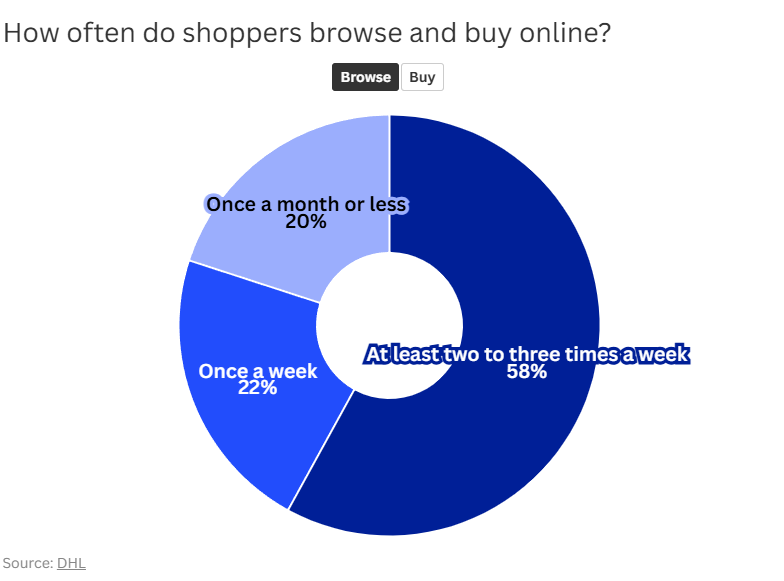
Here’s what’s happening.
1️⃣ Browsing Is A High Frequency Habit: Most shoppers browse multiple times a week. This makes “just looking” a regular behavior, not an occasional one.
2️⃣ Shopping Has Become Entertainment: Users treat online stores like content platforms. They explore products for inspiration, not just transactions.
3️⃣ Attention Comes Before Intent: Frequent browsing means customers interact with brands long before they are ready to buy. Visibility during this phase is critical.
4️⃣ Freshness Drives Engagement: Static product pages lose attention quickly. Regular updates like new arrivals or limited drops keep users coming back.
5️⃣ Discovery Matters More Than Search: Many users are not searching for something specific. They are discovering products as they browse.
6️⃣ Repetition Builds Familiarity: Repeated exposure during browsing sessions increases brand recall and trust over time.
7️⃣ Convert Browsers Into Buyers With Triggers: Small nudges like limited-time offers or new collections help shift users from passive browsing to active purchasing.
The Takeaway
Not every visitor is ready to buy. But most are ready to browse. Brands that treat browsing as a core behavior, not a side activity, are the ones that win attention and eventually conversions.
As we prepare more "Growthful" content, we'd love to hear your thoughts on today's edition! Feel free to share this with someone who would appreciate it. 🥰