What Meta rewards today
⚙️ How Facebook ads are evolving, alongside growing doubts around AI search summaries.

Hey there 🧠
Ready for another day of staying ahead of the competition in the Growth race?
Oh and before we go ahead! If your friend sent this to you, be sure to subscribe here! So you don’t miss out on any editions.
Partnership with Shipfusion
Most brands think fulfillment is a backend function. Your customers experience it as the brand itself.
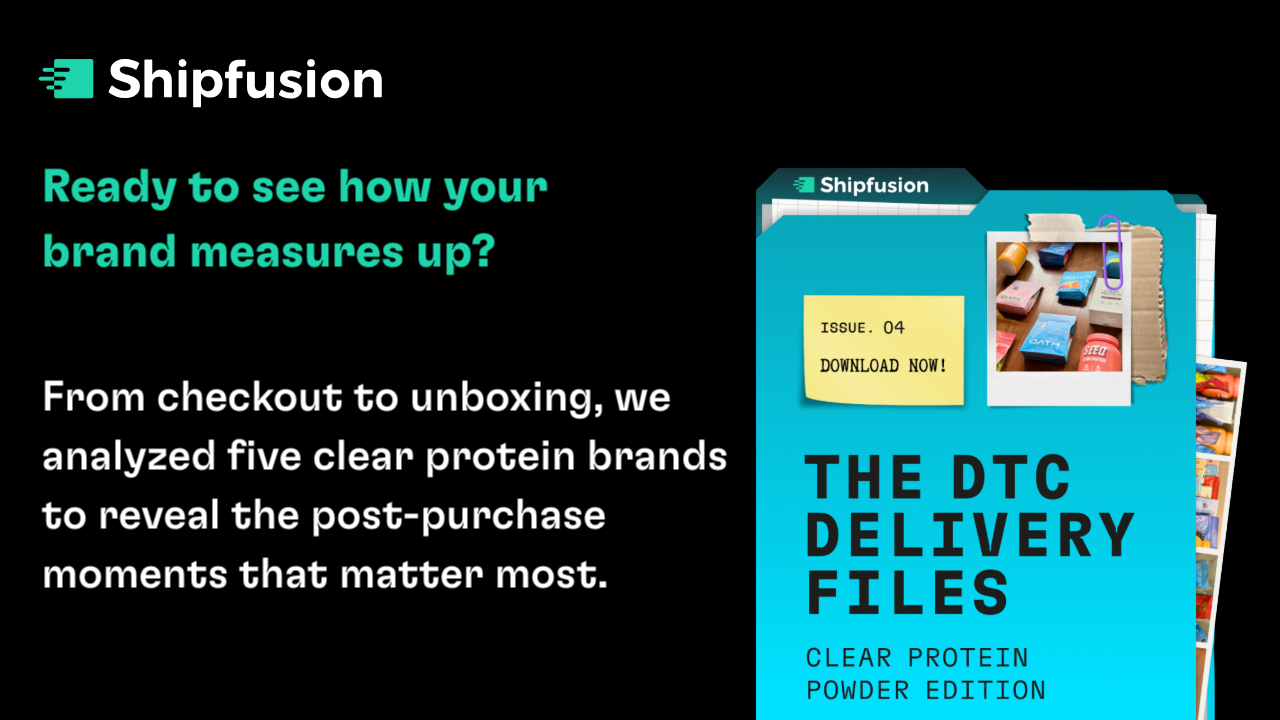
Shipfusion placed five real orders across leading clear protein brands and tracked everything after checkout, from tracking visibility and delivery speed options to unboxing and post-purchase communication.
What they found explains why repeat purchases quietly drop off. Here’s what stood out immediately:
- 0 brands used exterior or interior branding, so every box arrived forgettable
- Only 40% offered more than one delivery speed, limiting customer control
- Most post-purchase emails stopped at confirmations instead of building trust
Want to know how your brand stacks up?
If you ship products to customers, this report gives you a clear, benchmarked look at what great post-purchase checkout experiences actually include and where brands are leaving revenue on the table.
Download the DTC Delivery Files and audit your post-checkout experience today.
💡 Which Facebook Trends You Should Pay Attention To And Leverage This Year
Predictions in marketing are often vague. But Facebook ads are changing in visible, practical ways.
The team at WordStream breaks down what actually matters this year, cutting through AI hype to focus on what will move performance.
1️⃣ Clean Data Will Decide Winners: AI is not magic. It is pattern recognition fueled by data. When the inputs are messy, the outputs suffer. Platforms are increasingly dependent on accurate signals, whether first-party or third-party. Brands that can feed Meta clean, reliable audience data give the algorithm a real advantage it can act on.
2️⃣ Conversion Tracking Is Still Non-Negotiable: If you cannot clearly see where revenue comes from, you are flying blind. Solid conversion tracking is essential, but tracking alone is not enough. Use value-based conversions to understand which actions actually drive revenue. Combine the Meta Pixel with the Conversions API to reduce data loss and help the system learn faster and more accurately.
3️⃣ Audience Targeting Still Needs Human Direction: Automation does not mean abdication. Even when Meta’s AI handles optimization, it still needs guidance. Use the audience control dashboard to shape targeting inputs before letting the system scale. Algorithms perform best when they are nudged in the right direction rather than left entirely on their own.
4️⃣ Your Existing Audiences Are Now Your Edge: As third-party data fades, first-party audiences become more powerful. Upload customer lists to show Meta who actually converts. Segment high-value customers separately, exclude recent converters, and remove unsubscribed users. These signals prevent wasted spend and sharpen targeting efficiency.
5️⃣ Authenticity Will Outperform Polished Ads: AI-generated creatives are everywhere, and people are tired of them. The ads that stand out feel human. Raw visuals, honest messaging, and slightly imperfect execution now outperform glossy, overproduced graphics. Real stories cut through where automated perfection blends in.
The Common Thread
This year’s Facebook trends point to human-guided automation. Tools are smarter than ever, but they still rely on clean data, intentional targeting, and human creativity to deliver results.
The Takeaway
Winning on Facebook is not about surrendering control to AI. It is about pairing strong fundamentals with automation. Feed the system clean data, guide it with intent, and show up with real creativity. That balance is where performance lives.
💡 AI Summaries Are Convenient, But Nobody Is Betting The Farm
Insights from stackedmarketers
AI is everywhere.We all use it. We all benefit from it.
But when it comes to AI-powered search summaries, trust is still catching up to convenience.
Public sentiment today can best be described as skeptical curiosity.
Only six percent of US adults say they trust AI search summaries a lot. Nearly half say they trust them some, which is the digital equivalent of a shrug. Another thirty-four percent say not much, showing that skepticism cuts across the board.
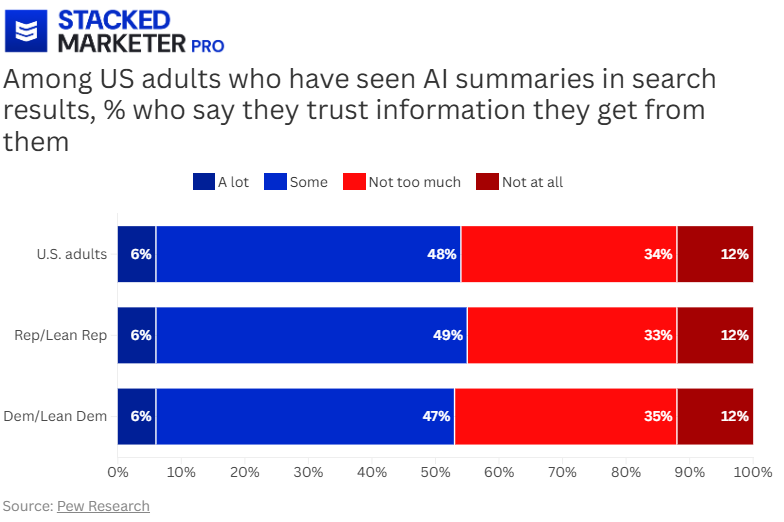
1️⃣ We Are In A Trust But Verify Phase:Users appreciate speed and convenience, but they have not forgotten early AI failures. High-profile hallucinations have left a lasting impression. As a result, people use AI summaries as a starting point, not a final authority. Trust will lag behind technical capability for years.
2️⃣ Convenience Does Not Equal Confidence:AI summaries save time, but they do not replace judgment. Users still cross-check sources, scroll deeper, and look for confirmation before acting. This behavior signals an opportunity for brands that show up as reliable references rather than surface-level summaries.
3️⃣ Accuracy Is Now A Competitive Advantage:As AI overviews expand, sloppy information becomes risky. If you want AI systems to cite you, your facts need to be clean, current, and verifiable. Schema markup, structured data, and source clarity matter more than ever. Authority is earned through precision, not volume.
4️⃣ Agencies Cannot Guess Their Way Through This Shift:The agencies that perform best are not experimenting blindly. They rely on up-to-date intelligence, testing, and clear frameworks to help clients navigate trust gaps, AI visibility, and search changes without damaging credibility.
The Takeaway
AI summaries are useful, but trust is still fragile. Brands that prioritize accuracy, clarity, and authority will benefit most as AI becomes more visible in search. In the trust but verify era, being dependable beats being fast.
As we prepare more "Growthful" content, we'd love to hear your thoughts on today's edition! Feel free to share this with someone who would appreciate it. 🥰