Users Do Not Trust This
⚡ Instead of relying on one AI agent for critical tasks, comparing models helps you understand strengths and reduce risk.

Hey there 🧠
Ready for another day of staying ahead of the competition in the Growth race?
Oh and before we go ahead! If your friend sent this to you, be sure to subscribe here! So you don’t miss out on any editions.
Partnership with Tatari
Meta Didn't Get Harder. You Just Hit the Ceiling.
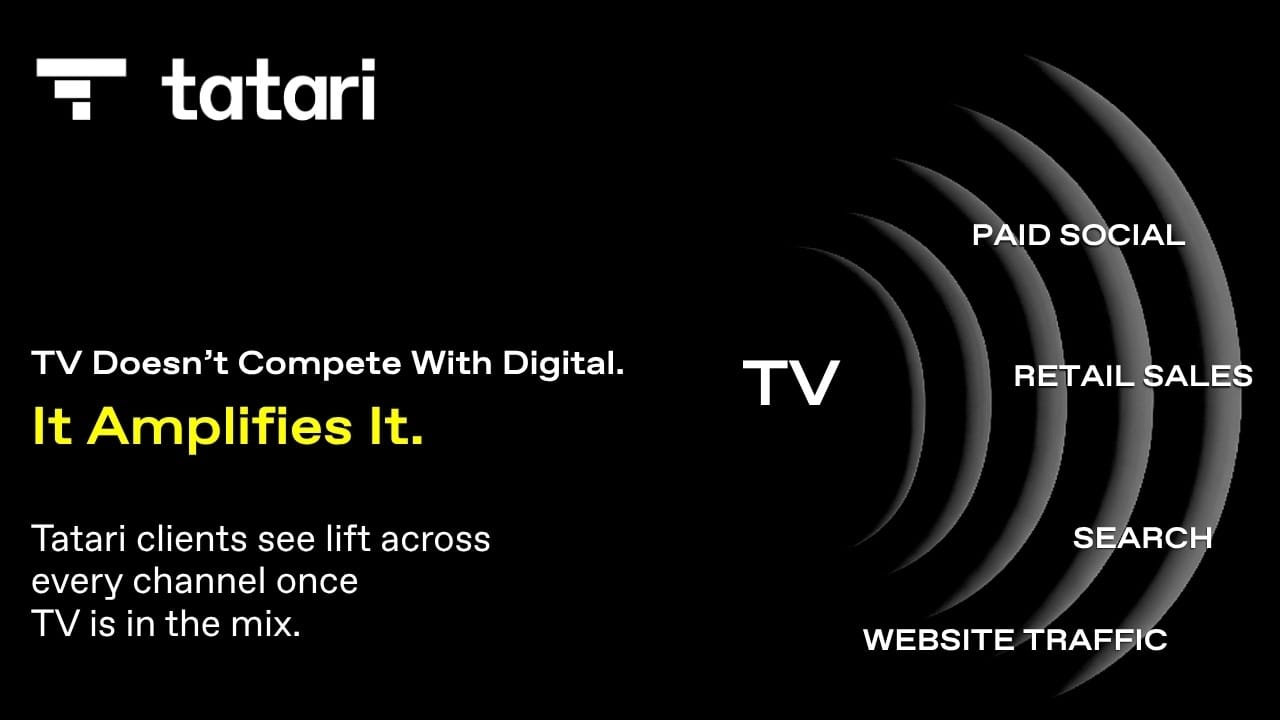
You've been told TV is out of reach. What nobody mentioned is that the measurement gap closed, the minimums dropped, and the brands hitting their numbers right now didn't stumble onto some new creative angle.
They opened a different channel entirely.
Tatari is a TV buying platform that lets you run across linear TV, streaming, and direct publisher buys, all from one place.
You see exactly where every ad aired, so nothing is hidden, and nothing is wasted. Every dollar ties back to actual site visits, signups, and purchases, not impressions that look good in a report and prove nothing in your books.
- Aroma360 cut CPA by 80% and doubled ROAS from a $14K linear pilot
- Knix hit a 70% lower CPA and 9,000 site visits within 5 minutes of a single TV spot airing
- Calm cut CAC by 52% and drove 612K incremental installs running linear and streaming together
Over 400 brands already run TV this way. You're either in that group, or you're funding their growth with every Meta dollar you spend.
Book a free demo and see what your numbers look like on TV!
💡 Why People Still Resist Using AI Agents
AI agents are getting more capable every day, yet adoption is slower than expected. The barrier is not technology; it is psychology. People hesitate not because AI cannot perform, but because they are unsure how much to trust it, how capable it really is, and how much control to give up.
Here’s what is holding adoption back and how to fix it.
1️⃣ Perceived Competence Blocks Usage:
People hesitate to use AI when they doubt its ability. Surprisingly, agents that sound too friendly or casual are seen as less capable. Clear reasoning and structured explanations increase confidence.
2️⃣ Trust Requires Transparency:
Users trust AI more when they understand its limits. Vague systems create uncertainty, while clearly stating what the agent can and cannot do builds credibility.
3️⃣ Too Much Or Too Little Control Fails:
Fully autonomous systems feel risky, while overly guided ones feel frustrating. The ideal balance is moderate autonomy where AI suggests options but users make final decisions.
4️⃣ Explain Decisions Clearly:
Showing how conclusions are reached makes AI feel more reliable. When users understand the logic, they are more likely to accept the outcome.
5️⃣ Avoid Over Humanizing The Agent:
Trying to make AI sound overly friendly can backfire. Competence is perceived through clarity and logic, not personality.
6️⃣ Design For Confidence, Not Just Capability:
Even powerful systems fail if users do not feel comfortable using them. Adoption depends on reducing uncertainty at every step.
The Takeaway
AI adoption is not just about what the system can do, it is about how people feel using it. Build for clarity, transparency, and balanced control. When users feel confident, adoption follows naturally.
💡 How To Compare Multiple AI Models In One Prompt
Most people use one AI model at a time and assume the output is “good enough.” But different models excel at different things. Some are better at structured thinking, others at nuance or real-time insights. Instead of guessing which one to use, you can compare them side by side and combine the best outputs into one answer.
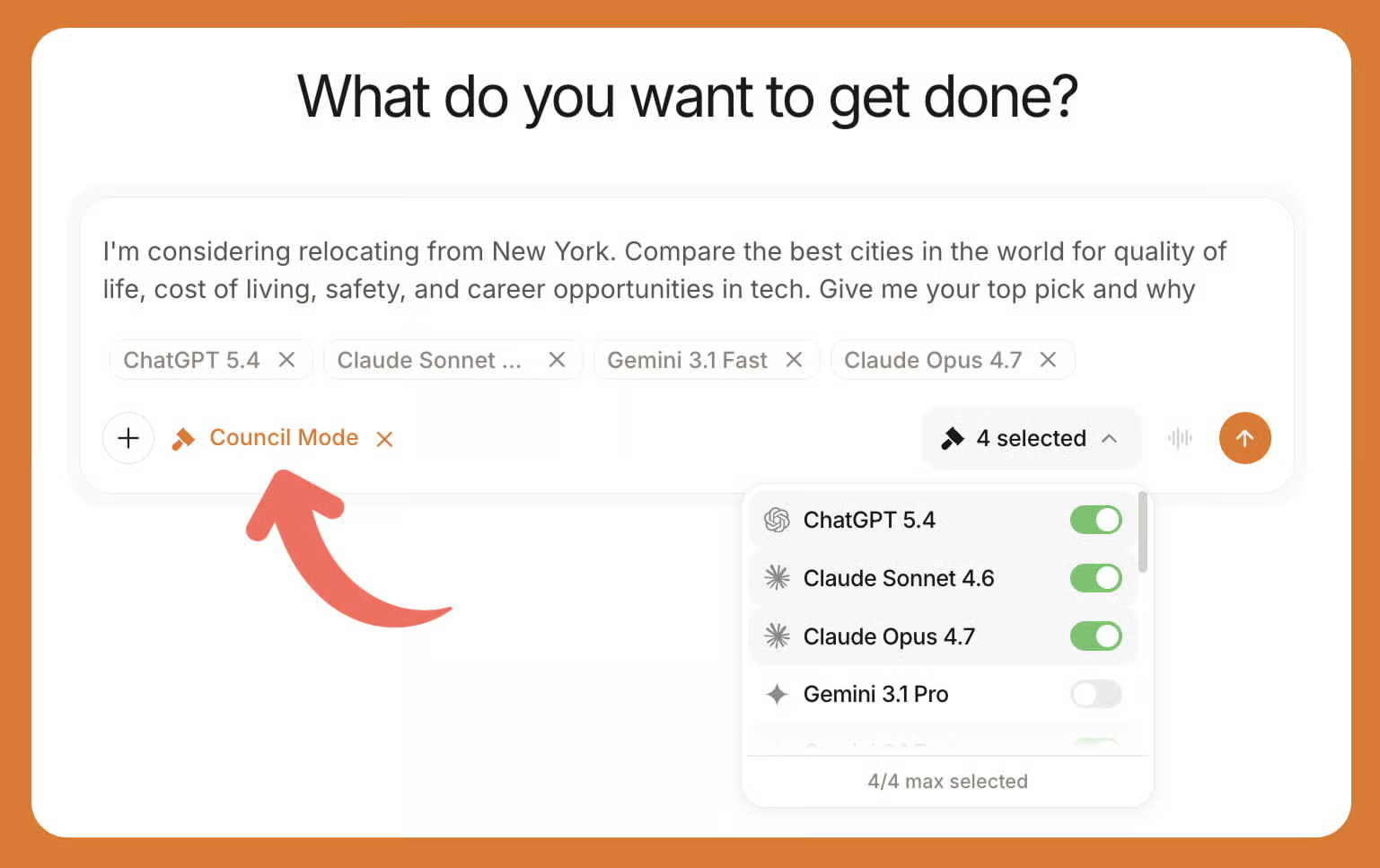
Here’s how to do it step by step.
1️⃣ Get Started With Anuma:
Go to Anuma and sign up to access its multi model comparison feature. This is where you can run multiple AIs together.
2️⃣ Enable Council Mode:
Start a new chat and select Council Mode. This allows multiple models to respond to the same prompt simultaneously.
3️⃣ Choose Your Models:
Pick up to four AI models like Claude, GPT, Gemini, or Grok. Each brings different strengths to the response.
4️⃣ Enter A Single Prompt:
Write your query once. For example, comparing cities based on quality of life, cost, safety, and career opportunities.
5️⃣ Review Side By Side Responses:
Each model generates its answer independently. You can compare how they approach the same problem differently.
6️⃣ Combine The Best Output:
Use the Unify feature to merge the strongest parts from each response into one clear and refined answer.
7️⃣ Continue Or Refine Further:
You can either use the final output or continue the conversation with a specific model to go deeper.
The Takeaway
No single AI model is perfect. The advantage comes from using multiple perspectives and combining them intelligently. By comparing outputs side by side, you get better answers, faster decisions, and more reliable results.
As we prepare more "Growthful" content, we'd love to hear your thoughts on today's edition! Feel free to share this with someone who would appreciate it. 🥰