This Is Why Users Stay
⚡ You scale content production and optimize strategy constantly, yet retention depends on how much effort users have already put in.

Hey there 🧠
Ready for another day of staying ahead of the competition in the Growth race?
Oh and before we go ahead! If your friend sent this to you, be sure to subscribe here! So you don’t miss out on any editions.
Partnership with Grapevine
Consumers trust experts. They tolerate brands.
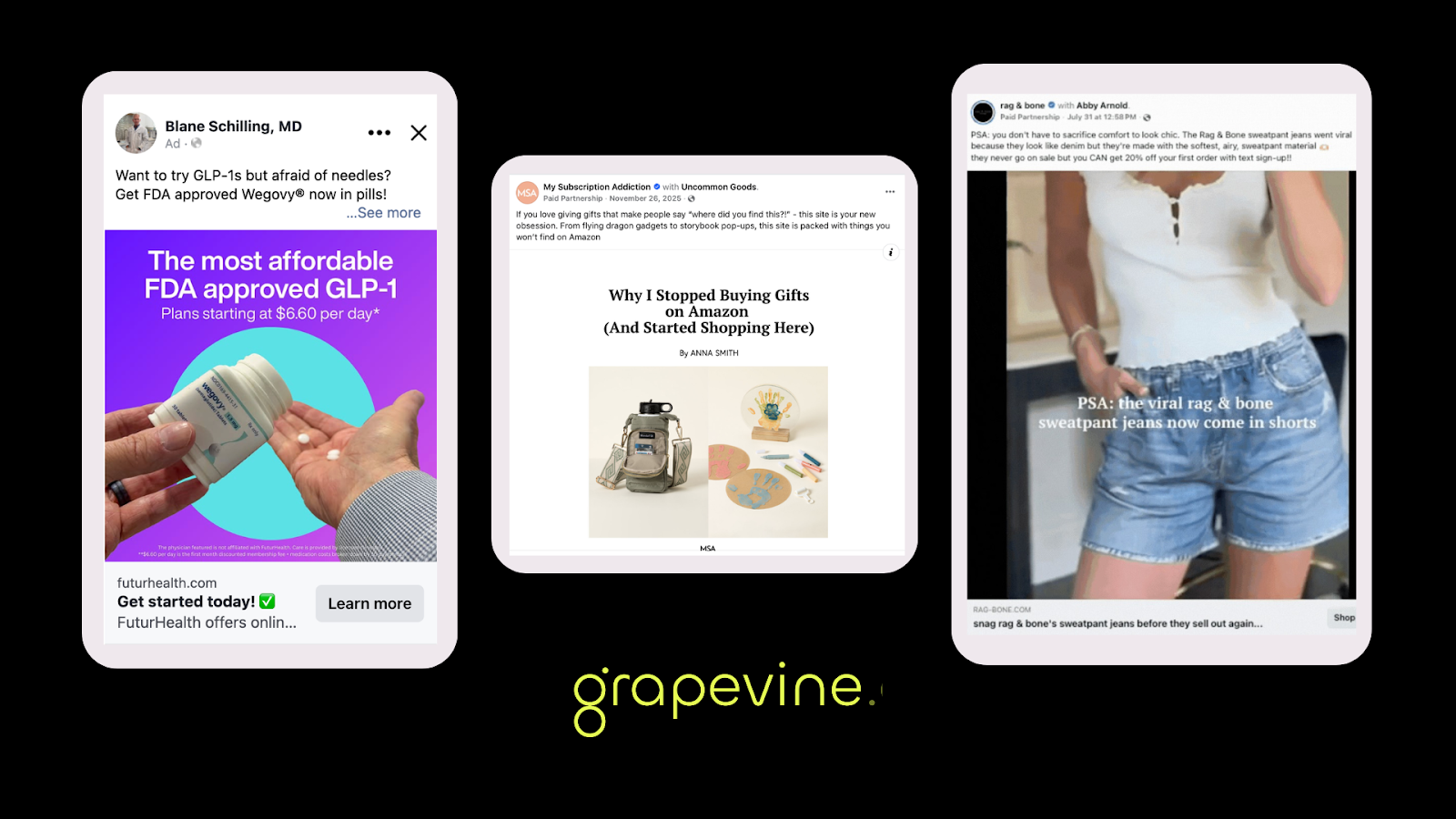
Consumers can smell a brand talking about itself. They scroll past it automatically, it doesn't matter how good the creative is.
What they don't scroll past: a registered dietitian recommending a protein bar. A dermatologist breaking down a skincare routine on camera. A running coach reviewing a shoe mid-run.
Your branded handle is working against you. Not because the creative is bad, but because the source is discounted before anyone reads the first line.
Grapevine runs creator whitelisting and publisher advertorial as one fully managed service. Brief to launch, no platform juggling, no separate agency relationships.
- Nood hit 4× ROAS while scaling spend using whitelisted creator ads
- Honeylove cut CPAs by over 20%, combining creator and publisher handles
- Mathnasium cut Meta CPL by 33% in under 30 days
Grapevine ads outperform branded creative by 25%+ across platforms. Consistently, not occasionally.
👉 Book a free strategy call for your first campaign strategy session - no commitment required.
💡 How To Use Sunk Cost To Increase Retention
You know that feeling when you continue something you no longer enjoy, just because you already paid or spent time on it? It could be a bad movie, a subscription you never use, or a product that stopped delivering value. Logically, walking away makes sense, but emotionally, it feels like losing something. That tension is exactly what the sunk cost fallacy exploits, and the smartest products build retention around it.
Here’s how to apply it.
1️⃣ People Stay Because They Feel Invested: Once users put in effort, they feel attached and treat that effort as something they might lose. Arkes and Blumer’s 1985 study showed that people who paid full price for theater tickets attended more shows, even bad ones, simply because they had invested more.
2️⃣ Loss Drives More Than Value: Our brains treat sunk costs as losses, and losses hurt far more than gains feel good. This is why users keep paying for unused gym memberships or software subscriptions, because quitting feels like admitting waste.
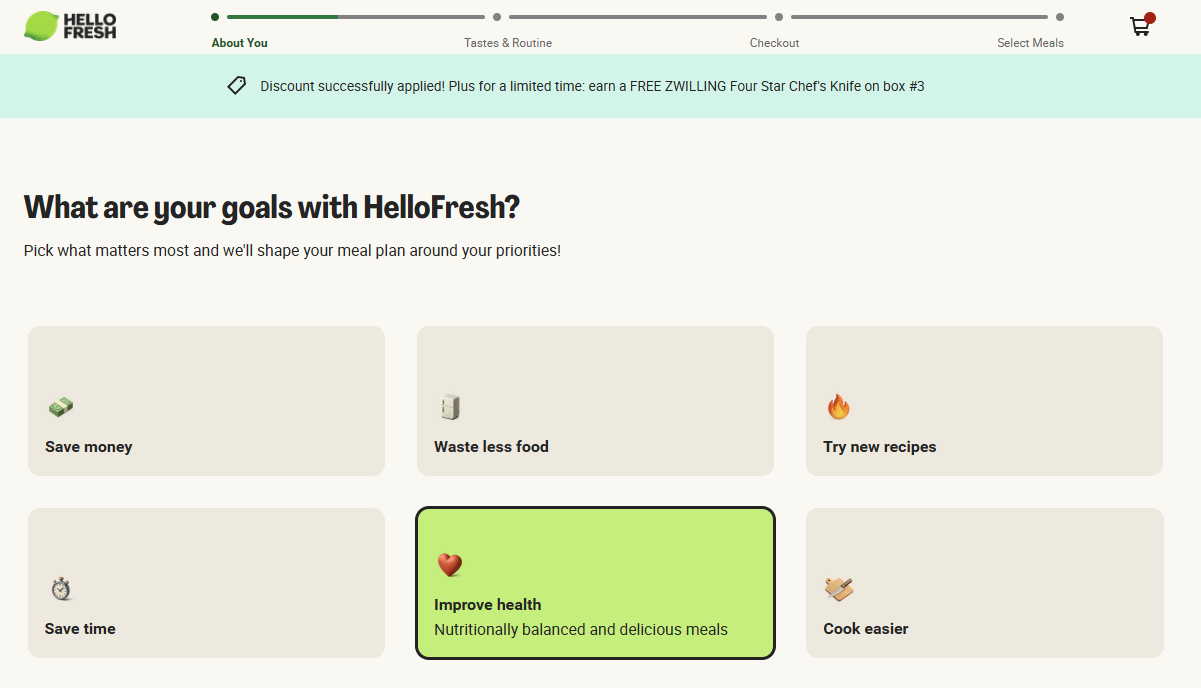
3️⃣ Use Micro Investments Early: Get users to take small actions before asking for commitment. HelloFresh does this well by making users pick meals and customize boxes before showing pricing, so by checkout, users feel too invested to abandon.
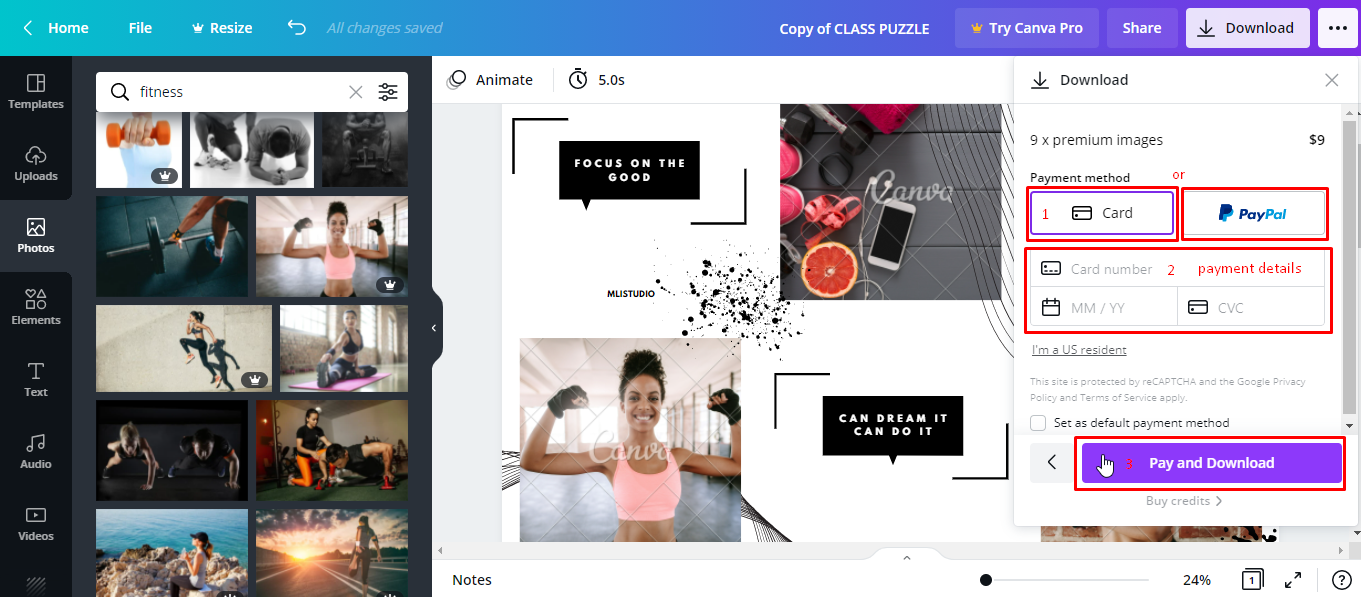
4️⃣ Build Progress Before Paywalls: Let users create something valuable before asking them to pay. Canva allows users to design fully with premium elements, but only asks for payment at download, making users feel that switching tools would waste their effort.
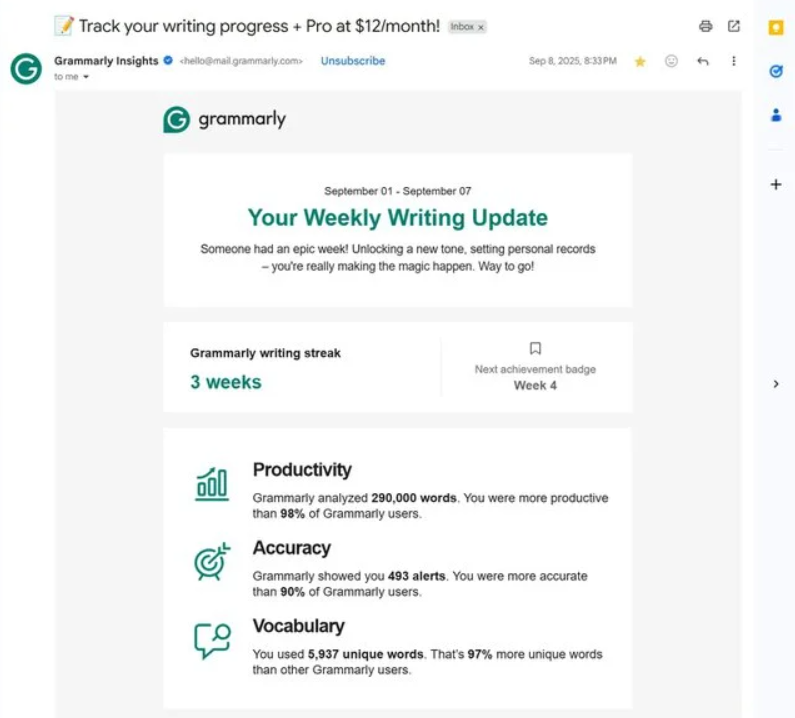
5️⃣ Show What They Would Lose: Instead of highlighting features, highlight usage. Grammarly does this in renewal emails by showing how many words were checked and errors corrected, making cancellation feel like losing accumulated value.
6️⃣ Make Investment Visible: Turn user activity into something tangible through dashboards or usage stats. When users can clearly see their history and effort, they feel they have something real to lose.
The Takeaway
Retention is not just about building a better product. It is about making users feel invested. The more effort, time, and progress they put in, the harder it becomes to leave. Build that investment early, reinforce it consistently, and users will stay even when alternatives exist.
💡 What Actually Makes Content Perform
Most teams assume better content comes from bigger budgets or better timing. But the data tells a different story. High-performing content is not about spending more, it is about executing better. The real difference lies in how well teams understand their audience, align internally, and deliver value at the right stage.
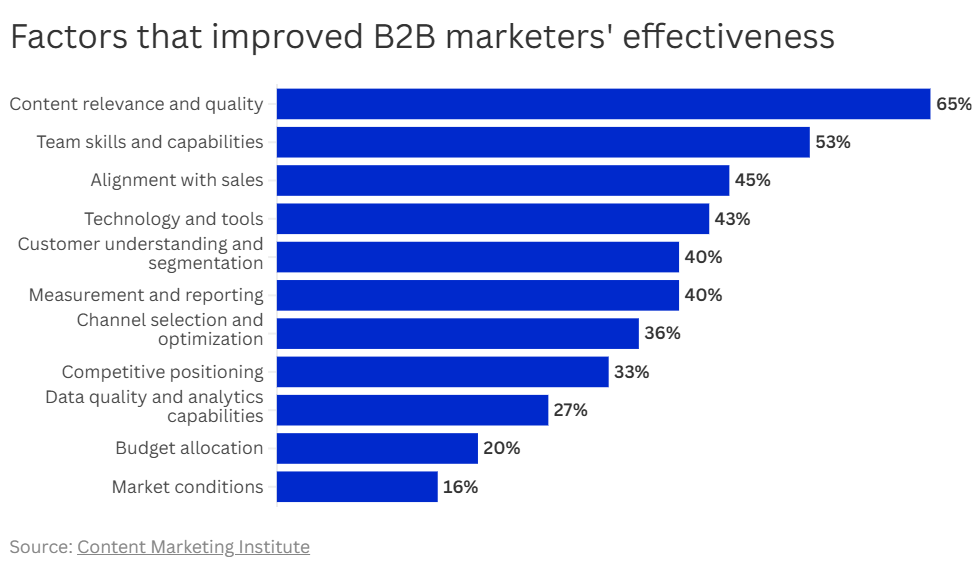
Here’s what actually drives performance.
1️⃣ Relevance And Quality Win First: Around 65% of marketers say content performance improves when it is more relevant and higher quality. This means creating the right content for the right audience at the right stage of the buying journey.
2️⃣ Skills Shape Output: Over half of marketers point to team capability as a key driver. Better thinking, better storytelling, and better execution directly improve results more than tools alone.
3️⃣ Sales Alignment Closes The Loop: About 45% highlight alignment with sales as critical. Content should not just educate, it should address real objections and help move deals forward.
4️⃣ Tools Support, Not Lead: Technology helps streamline workflows, but it does not replace strategy. The right tools amplify good execution, they do not fix weak content.
5️⃣ Budget Matters Less Than You Think: Only a small percentage links performance to budget or market conditions. This shows execution matters more than external factors.
6️⃣ Use Real Deal Data: Set up regular syncs between content and sales teams. Use closed lost data to identify what content could have changed the outcome.
The Takeaway
High-performing content is not built with bigger budgets; it is built with better execution. Teams that win focus on relevance, skill, and alignment with real buyer needs. The advantage does not come from spending more; it comes from understanding and executing better.
As we prepare more "Growthful" content, we'd love to hear your thoughts on today's edition! Feel free to share this with someone who would appreciate it. 🥰