The Sales Format That Converts
🎯 Match your sales approach to what customers are buying, then measure your brand’s share of visibility across AI search.

Hey there 🧠
Ready for another day of staying ahead of the competition in the Growth race?
Oh and before we go ahead! If your friend sent this to you, be sure to subscribe here! So you don’t miss out on any editions.
In Partnership with AirOps
Your Buyers Aren’t Waiting for Better AI Measurement
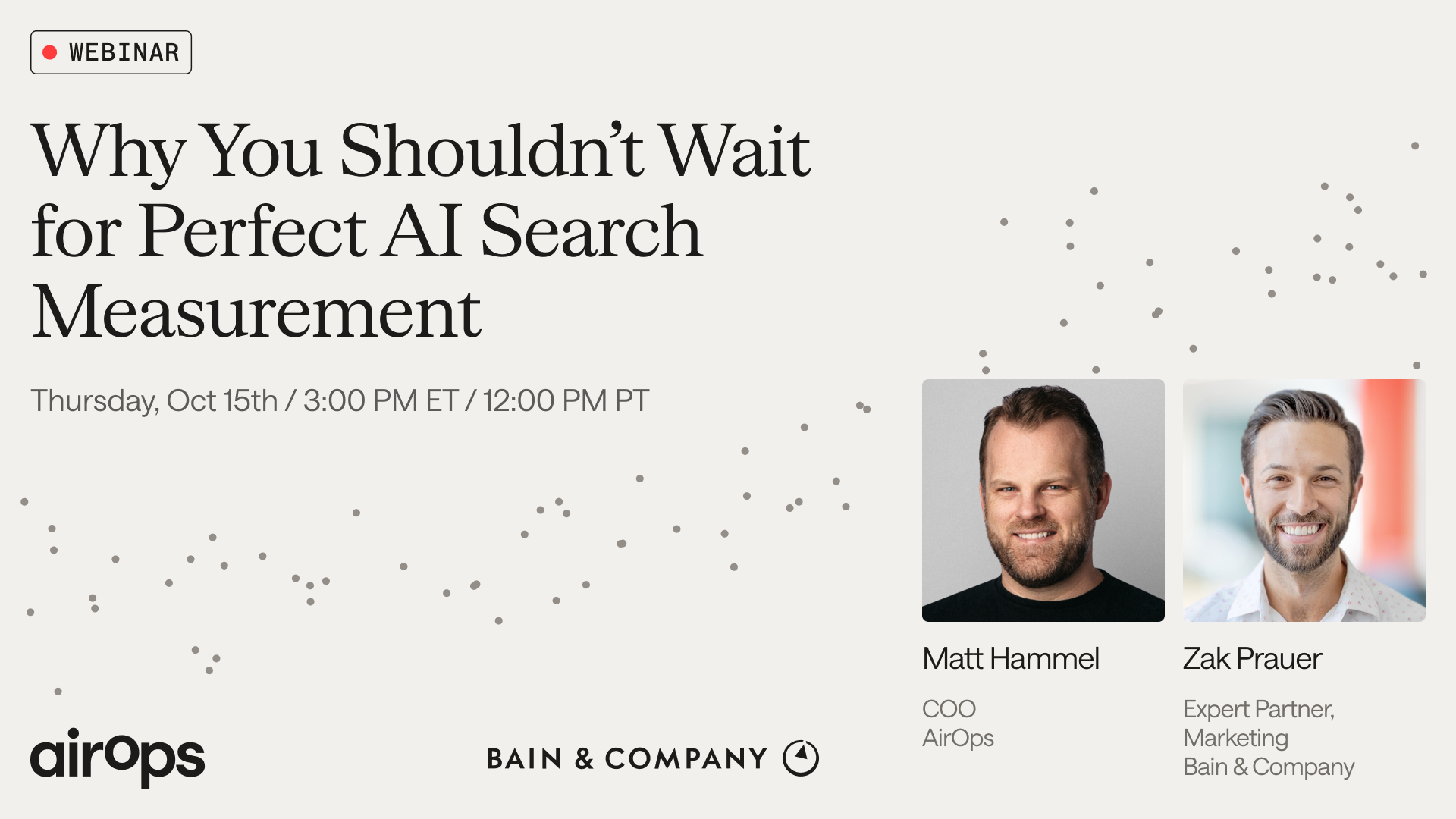
Your buyers are asking AI what to buy. But when leadership asks which sales it drove, your attribution report doesn’t give you a clear answer. Waiting for one could mean losing buyers before they ever reach your site.
On October 15, join Matt Hammel, COO of AirOps, and Zak Prauer, Expert Partner, Marketing at Bain & Company, for a live conversation to help you:
- Understand why waiting for perfect measurement could cost more than investing in AI search today.
- See how AI search shapes brand preference, and why a recommendation carries more weight than a citation.
- Decide how to invest now and what evidence to demand that your spending is creating additional growth.
You’ll leave knowing how to make the case for AI search when “we can’t measure it yet” is what’s holding your budget back.
Can't attend the session live? Register anyway, and you’ll get the recordings in 24 hours.
💡 The More Complex Your Product, The More In-Person Selling Matters
Not every sales conversation needs to happen face to face.
Research suggests the right mix of remote and in-person meetings depends heavily on how complex the product is.
Here’s what the research found.
1️⃣ Simple Products Need Less Face Time: For standardized products, remote selling can improve efficiency without hurting results.
The study found that holding around 37.9% of meetings in person improved sales performance by 27.3% compared with relying entirely on face-to-face meetings.
2️⃣ Complex Products Benefit From In-Person Meetings: When products require customization, explanation, or greater trust, customers tend to value direct interaction more.
For complex products, using only remote meetings reduced sales performance by as much as 32.4%.
3️⃣ Medium Complexity Needs Balance: Products between simple and highly customized performed best with a mixed approach.
Researchers found the optimal share was around 64.1% of meetings held in person.
4️⃣ Customer Preference Still Matters: Complexity should guide the approach, but it shouldn’t override what the buyer wants.
If a customer strongly prefers remote meetings, accommodate that preference even when the product is complex.
5️⃣ Reduce Face Time As Trust Builds: Complex sales may benefit from more in-person interaction early in the relationship.
As the salesperson understands the customer better and trust develops, more meetings can gradually move online.
Why It Works
Remote meetings are efficient, while in-person conversations make it easier to build trust, understand concerns, and communicate complex value.
The Takeaway
Match the sales format to the product.
Simple offerings can lean remote, while complex products generally benefit from more face-to-face interaction, especially early in the relationship.
💡 See How Visible Your Brand Is In AI Search
AI search visibility is becoming another layer of brand discovery.
Conductor’s AI Visibility Analysis tool helps you see where your brand appears, what content gets cited, and how you compare with competitors.
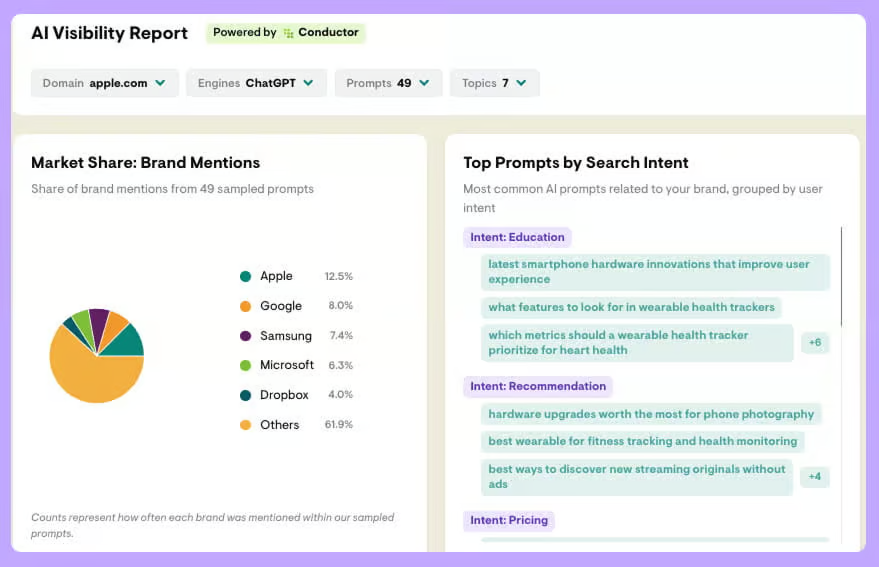
Here’s how to use it.
1️⃣ Run Your Website Through Conductor: Open Conductor’s AI Visibility Analysis tool, enter your company website and work email, then submit the request.
Conductor will send your report by email.
2️⃣ Check Your AI Market Share: Review how often your brand is mentioned compared with competitors.
This gives you a clearer view of whether AI platforms are surfacing your brand consistently within your category.
3️⃣ Review Funnel Visibility: See where your brand appears across different search intents and stages of the customer journey.
This can reveal whether you are visible mainly during awareness, consideration, or more purchase-focused searches.
4️⃣ Identify Your Most Cited Content: Look at the exact pages AI systems are already referencing.
These pages can help you understand what formats, topics, and content structures are earning visibility.
5️⃣ Check Brand Sentiment: Review how AI systems describe your brand and whether the overall perception is positive or negative.
You can also use Ask Conductor to dig deeper into gaps and opportunities.
Why It Works
AI visibility is difficult to improve if you don’t know where you already appear.
A structured report helps connect brand mentions, cited content, search intent, and sentiment in one place.
The Takeaway
Treat AI visibility like any other search channel.
Measure where you appear, identify which content earns citations, compare your position with competitors, and use those insights to improve the areas where your brand is still missing.
As we prepare more "Growthful" content, we'd love to hear your thoughts on today's edition! Feel free to share this with someone who would appreciate it. 🥰