Rankings are not enough
🔍 What works in GEO and AIO, plus the psychology behind mimicry.

Hey there 🧠
Ready for another day of staying ahead of the competition in the Growth race?
Oh and before we go ahead! If your friend sent this to you, be sure to subscribe here! So you don’t miss out on any editions.
Partnership with Motion
Why More Ads Aren’t Creating More Results
Creative strategy is having a real moment. Budgets are rising, AI is accelerating production, and the gap between volume and actual performance keeps widening.
Motion’s free Creative Strategy Bootcamp is your invite to build the skill that separates you from everyone else.
Over eight live weeks, you'll move through three focused phases designed to turn theory into repeatable output and AI-proof your career.
- In Foundations, you learn how to write scroll-stopping hooks, turn product insight into scalable concepts, and use performance signals to guide creative decisions instead of guessing.
- In Sprints, you run full creative cycles end to end, producing ads, testing ideas, iterating quickly, and seeing how structure compounds results.
- In Masters, you go deeper into advanced frameworks and systems that top Creative Strategists use to operate at the top 1% across brands and platforms.
You learn live from working strategists, collaborate with serious peers, and build a portfolio that proves you can execute.
It’s 100% free, fully live, and registration closes March 17th.
If you want the skill that actually moves paid social in 2026, this is your moment.
💡 The New Reality Of GEO And AIO: What Works And What Doesn’t
SEO fundamentals are not dead but the infrastructure deciding visibility has changed.
With AI Overviews appearing on a growing share of searches and Gemini often prioritizing forums like Reddit over official brand sites, we are firmly in the AEO and GEO era.
Here is what actually works now.
1️⃣ Your Website Is Not The Only Authority Anymore: Traditional SEO was linear. Earn backlinks, build trust, rank higher. GEO changes that. AI models interpret repeated mentions across multiple trusted domains as credibility. Managing brand presence across the broader web now functions like a ranking factor.
2️⃣ Ranking First Does Not Guarantee Citations: AI systems run multiple variations of a query to identify consensus and extract the clearest answer. A well-structured niche site can outrank a large domain in citations if it presents information cleanly. Extraction quality now competes with domain authority.
3️⃣ Informational Traffic Is Under Pressure: AI Overviews increasingly answer how-to queries directly within the results page. Users get value without clicking through. To stay relevant, optimize for being cited within AI responses and invest in content that cannot be easily replicated, such as proprietary data and expert perspectives.
4️⃣ Structure Now Outweighs Word Count: Dense narratives filled with fluff are difficult for AI to parse. Direct answers within the first hundred words, structured headings, and clear definitions increase citation likelihood. If it is easy to extract, it is easy to cite.
5️⃣ Fundamentals Still Matter: GEO is layered on top of traditional SEO, not a replacement. Weak site architecture or thin content cannot be fixed by AI optimization tactics. If you rank well but are not cited, the issue likely lies in structure, not authority.
The Takeaway
SEO did not disappear. It evolved. Winning today requires optimizing for both traditional rankings and AI extraction. Structure for machines, build authority beyond your domain, and adapt to how discovery now works.
💡 The Mimicry Effect And Why Copying Builds Conversions
Ever crossed your arms right after someone else did. That is not a coincidence. That is neuroscience.
Mirror neurons in our brains make us automatically recognize and imitate behavior. Babies mimic facial expressions within weeks of being born. As adults, we continue copying gestures, tone, and language without noticing.
Research shows this instinct builds trust fast.
In one study, waitresses who repeated customers’ orders received significantly larger tips. Another found that subtle mimicry during negotiations increased deal success from 12.5 percent to 67 percent. Mimicry creates rapport. Rapport drives action.
Here is how to apply it.
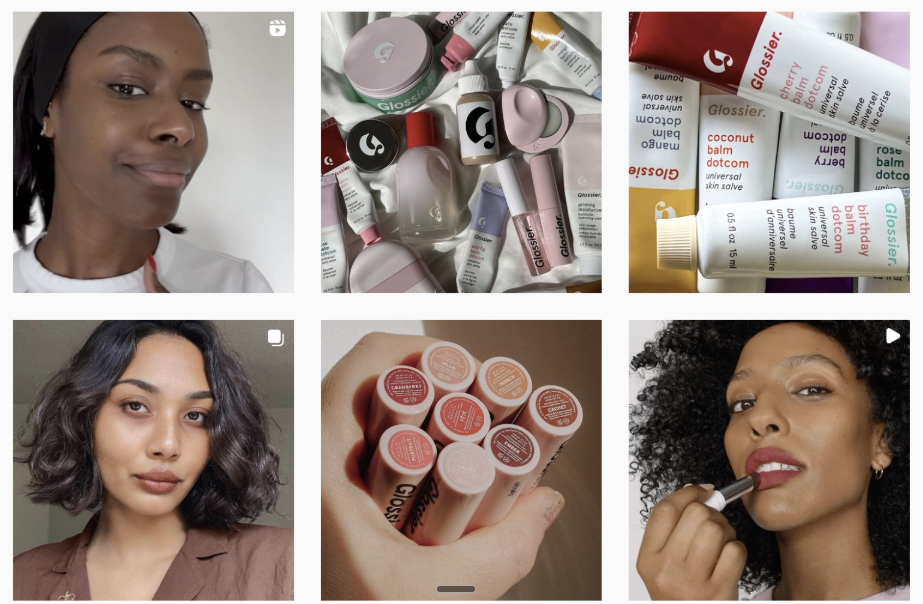
1️⃣ Show People Using Your Product: We imitate those we relate to. Featuring real customers or niche creators actively using your product helps prospects visualize themselves doing the same. Glossier leans heavily on user-generated content, reposting real customer routines and selfies. The result is a powerful peer influence that turns observation into imitation.
2️⃣ Mirror Your Audience’s Language: Familiar language lowers resistance. When brands use the exact phrases their customers use, it signals understanding. Fitness brands use community slang. Slack emphasizes clear, human language in its guidelines. Study reviews, forums, and support tickets to capture authentic phrasing and reflect it back in your messaging.
3️⃣ Subtly Match Prospects In Conversations: During sales calls or negotiations, matching tone, posture, and key phrases increases perceived connection. Studies show participants rarely detect the mimicry consciously. Yet the effect is measurable. When people feel heard and understood, they are more likely to agree and commit.
The Takeaway
Mimicry is not manipulation. It is alignment. When customers see themselves in your content, hear their own language reflected back, and feel mirrored in conversations, trust forms naturally. And trust shortens the path to conversion.
As we prepare more "Growthful" content, we'd love to hear your thoughts on today's edition! Feel free to share this with someone who would appreciate it. 🥰