Processing feels like the truth
🧠 Why easy to process marketing win trust, and why do rewards matter more than values

Hey there 🧠
Ready for another day of staying ahead of the competition in the Growth race?
Oh and before we go ahead! If your friend sent this to you, be sure to subscribe here! So you don’t miss out on any editions.
Partnership with Levanta
Modern Shoppers Buy Everywhere. Your Affiliate Program Should Too
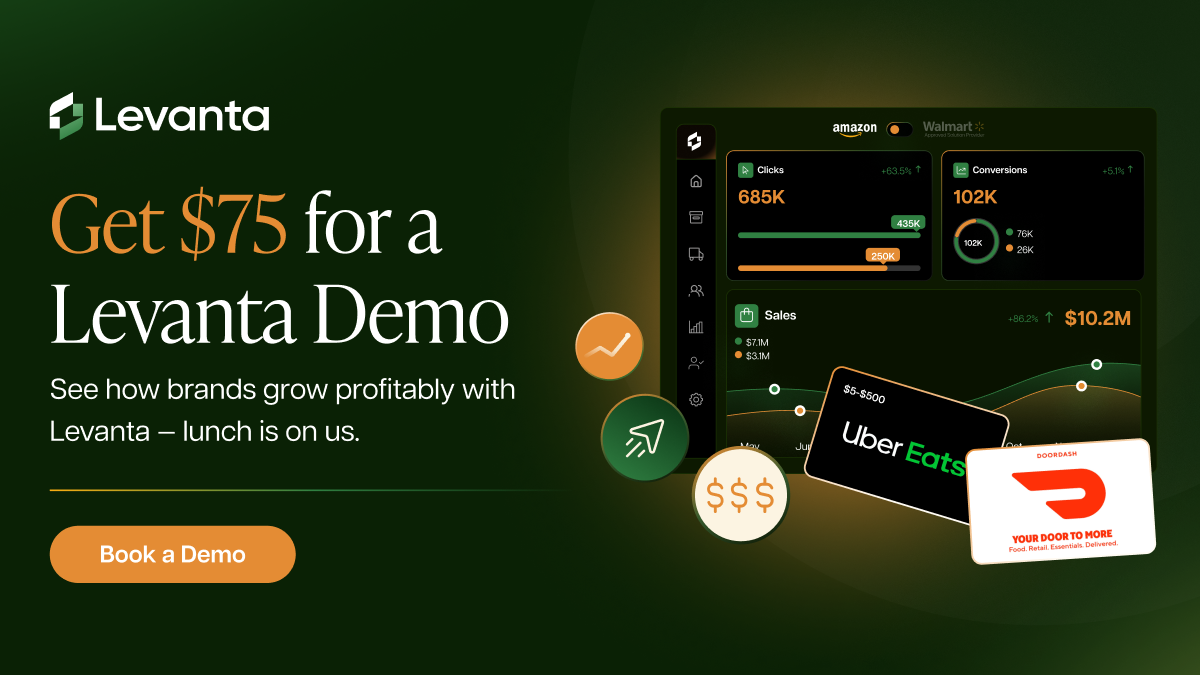
If your affiliate program only lives on your DTC site, it’s built for 2010. Today, customers research on Amazon, compare on Walmart, and purchase wherever it’s convenient.
When programs don’t follow that behavior, visibility suffers, making it harder to see what’s driving revenue and what to scale next.
Levanta helps modern e-commerce brands run affiliate and creator partnerships across multiple marketplaces as a single, measurable performance channel.
With Levanta, sellers can:
- Partner with 50,000+ vetted creators and affiliates
- Track clicks, sales, and ROI with clear analytics
- Amplify what works and stop paying for what doesn’t
- Manage creators, commissions, and payouts across marketplaces with ease
Qualified sellers who book a demo will receive a $75 Uber Eats or DoorDash gift card. Eligibility confirmed after booking.
Book a Demo (Button)
💡 Processing Fluency
Most decisions feel rational. But many are made before logic even shows up.
Imagine choosing between two products on a shelf. One looks clean and effortless to read. The other feels visually noisy and hard to process. You reach for the clean one without thinking. That reaction is not a preference. It is psychology.
This is Processing Fluency. We instinctively prefer things that are easy for our brains to process. Ease feels safe. Ease feels true. Ease feels better.
When something is hard to read, understand, or navigate, our brain interprets that friction as risk.
Research confirms this bias. In one study, companies with easy-to-pronounce stock symbols consistently outperformed those with difficult ones. Investors did not analyze fundamentals. They trusted what felt simpler to say.
Marketing works the same way. Here is how to design for fluency instead of fighting it.
1️⃣ Simplify Visuals To Increase Trust: If your page looks like work, users assume the decision will be work too. Hard-to-read fonts, low contrast, cluttered layouts. These do not just look bad. They reduce credibility.
Studies show that instructions printed in difficult fonts are perceived as harder to complete, even when the task is identical. Visual clarity lowers perceived effort, which raises trust. This is why interfaces like Google’s homepage remove everything unnecessary. Less friction means faster confidence.
2️⃣ Use Rhythm To Signal Truth: Statements that rhyme or flow feel more accurate. This is known as the Rhyme as Reason effect. A phrase that sounds good is processed more smoothly, and that smoothness gets mistaken for correctness. Brands have used this for decades. Simple rhythmic slogans stick because they feel right before they are evaluated. You do not need poetry. Even light alliteration or cadence can make claims feel more believable.
3️⃣ Make Choices Feel Familiar: Fluency increases when something matches existing mental models. Icons, layouts, and flows that users already understand remove hesitation. Stripe did not reinvent checkout.
It copied the pattern people already trusted. Card number. Expiry. CVC. One clean column. No surprises. Familiarity reduces cognitive load. And when users do not have to think, they are more likely to proceed.
The Takeaway
People do not reject your message because it is wrong. They reject it because it is hard to process. Clarity feels like truth. Familiarity feels like safety. If users have to pause to understand your page, your credibility has already dropped. Make it easy to see, easy to read, and easy to recognise. Fluency does the persuasion before your copy ever gets the chance.
💡 Why Customers Really Keep Coming Back
We like to believe loyalty is emotional. Shared values. Brand love. Feeling seen.
But the data tells a far more practical story. For most customers, repeat behaviour is not about connection. It is about incentives.
Recent findings show that the strongest driver of loyalty is not product quality or brand values. It is gamification.
1️⃣ Loyalty Programs Beat Brand Affinity: The single biggest reason customers stay is simple. Rewards. Around 41% of consumers say they remain loyal because a brand offers a loyalty program. Points, perks, tiers. These act like golden handcuffs. The more someone accumulates, the harder it feels to leave.
2️⃣ The Program Can Matter More Than The Product: High-quality products still matter, but less than many brands assume. Only about a third of customers say they stay primarily for product quality. For a large segment, the program itself becomes the real value. The product is the vehicle. The rewards are the reason.
3️⃣ Values And Emotional Connection Are Minor Drivers: Despite how often they dominate brand strategy decks, values and emotional resonance play a much smaller role. Only a small fraction of customers stay because they align with a brand’s values. Even fewer stay because the brand makes them feel special. That does not mean these factors do not matter. It means they are not the main retention engine.
4️⃣ Loyalty Is Often Transactional, Not Emotional: For many customers, loyalty is conditional. They are loyal to the benefits, not the logo. If the rewards disappear, so does the behaviour. This challenges the idea that most customers are deeply attached. Many are simply responding to incentives that make switching feel costly.
5️⃣ Simple Programs Still Capture Value: You do not need a complex ecosystem to benefit. Even a basic point for a purchase system captures part of that 41%. No program at all means leaving retention power on the table for competitors to claim.
The Takeaway
Brand love is not the default. Incentives are. If you want customers to come back consistently, give them a reason that compounds over time. Loyalty programs work not because they are emotional, but because they make staying feel smarter than leaving.
As we prepare more "Growthful" content, we'd love to hear your thoughts on today's edition! Feel free to share this with someone who would appreciate it. 🥰