Make The Winning Metric Stand Out
🧠 Understand how precise numbers shape product perception, then learn why small-business optimism could unlock more spending and expansion.

Hey there 🧠
Ready for another day of staying ahead of the competition in the Growth race?
Oh and before we go ahead! If your friend sent this to you, be sure to subscribe here! So you don’t miss out on any editions.
In Partnership with AirOps
Could Your Reporting Get the Wrong Channel Cut?
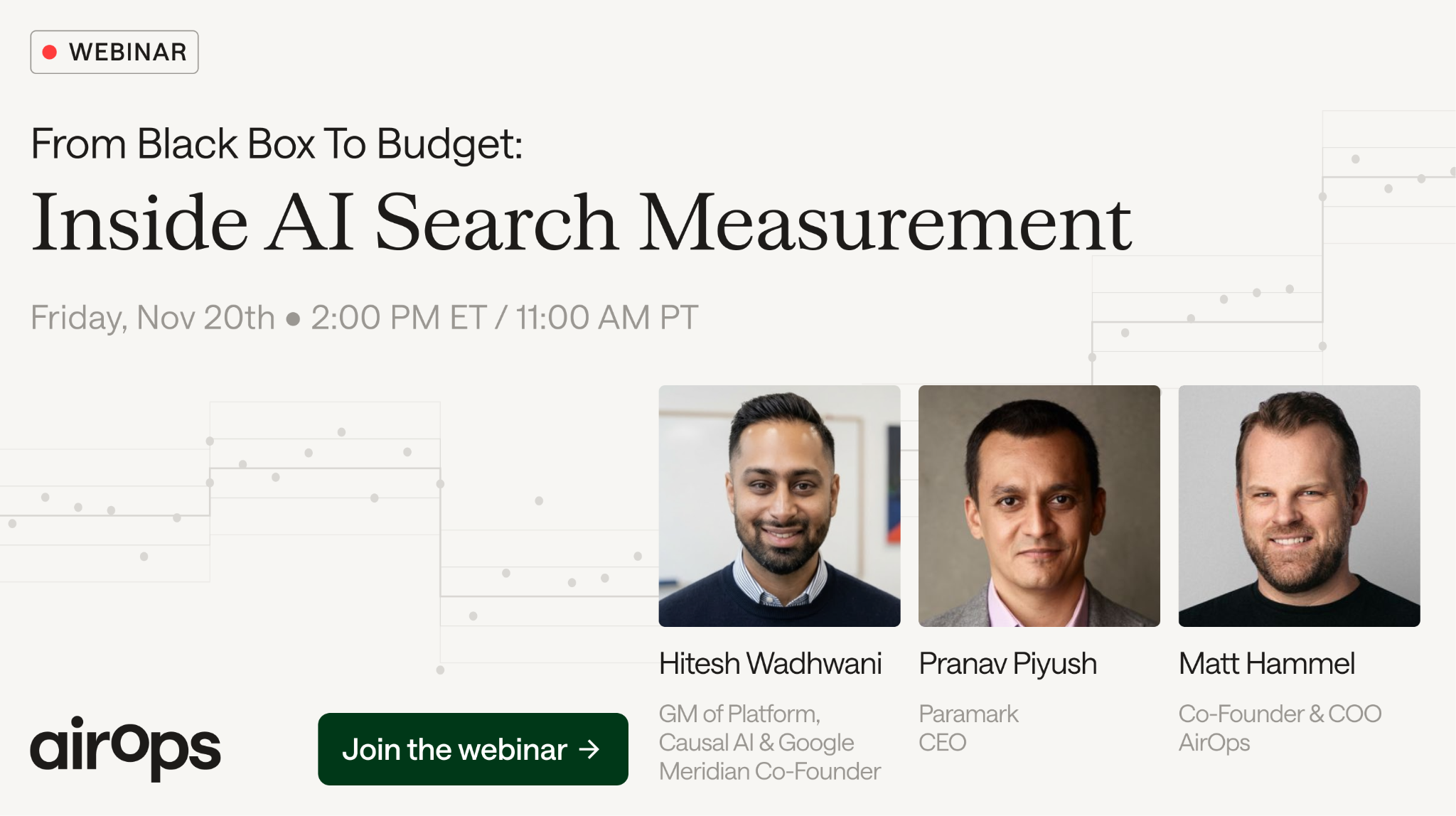
AI search could influence a buyer long before a sale shows up in your reports. If that influence goes uncredited, you could cut spending on a channel that’s helping customers choose you.
On November 20 at 2 PM ET, get inside the measurement work with Google Meridian creator Hitesh Wadhwani, Paramark CEO Pranav Piyush, and AirOps’ COO Matt Hammel.
They’ll break down the blind spots that could be steering your spend:
- Understand where AI search attribution falls short before treating low tracked results as a reason to cut.
- Learn the three requirements for credible measurement so you can spot what your provider’s reporting is missing.
- Explore how AI search fits into existing marketing mix models alongside the channels competing for your budget.
Take the gaps in your reporting back to your team before they become cuts in your budget.
Can't attend the session live? Register anyway, and you’ll get the recordings within 24 hours.
💡 Precise Numbers Work Better When Smaller Is Better
Not every product metric benefits from extra precision.
Research suggests exact numbers attract more attention when the feature is better at a lower value.
Here’s what the data shows.
1️⃣ Precision Can Increase Product Appeal: When shoppers preferred a lower number, such as less weight or faster charging, precise figures increased product liking by 15%.
A value like 7.66 oz can feel more meaningful than simply 7 oz.
2️⃣ Exact Numbers Get More Attention: In one experiment, lighter headphones received 22% more attention when their weight was shown precisely.
The added detail makes the feature stand out more during comparison.
3️⃣ Price Works The Same Way: Shoppers gave a precise headphone price 24% more weight than a rounded one.
That means precision can help when price is a competitive advantage, but it may work against you when you are trying to upsell.
4️⃣ Bigger-Is-Better Metrics Don’t Need It: For features such as battery life or resolution, precise numbers made little difference.
If 30 hours already communicates the benefit clearly, 30.4 hours adds very little.
5️⃣ Precision Also Changes Browsing Behavior: More precise real estate prices generated 13% more pageviews in one analysis.
But in negotiated settings, rounded prices can sometimes attract more offers.
Why It Works
Precise numbers attract attention and feel more accurate.
People then give more weight to the feature that captured that attention.
The Takeaway
Use precision like a spotlight.
Add detail to the metrics where lower is better, and keep rounded numbers where extra precision adds no real advantage.
💡 Small-Business Owners Are Betting On Growth Again
Small-business confidence appears to be moving in one direction: up.
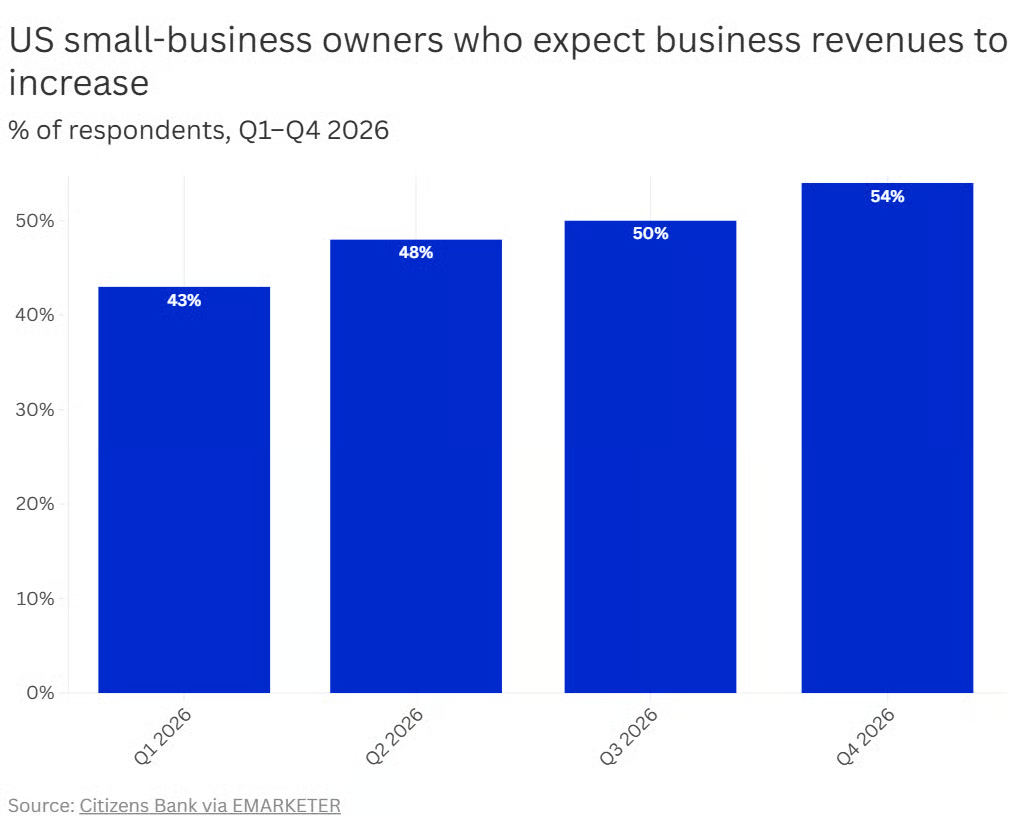
Citizens Bank found that the share of US small-business owners expecting revenue growth increased every quarter of 2026.
Here’s what the data shows.
1️⃣ Growth Expectations Started At 43%: In Q1, fewer than half of small-business owners expected their revenue to increase.
That changed quickly as the year progressed.
2️⃣ Confidence Rose Every Quarter: The figure climbed to 48% in Q2, reached 50% in Q3, and hit 54% in Q4.
For the first time this year, a majority of owners now expect revenue growth.
3️⃣ The Increase Was Consistent: From Q1 to Q4, confidence rose 11 percentage points.
More importantly, not a single quarter moved backward, making the trend more notable than a temporary spike.
4️⃣ Confidence Can Shape Spending: Businesses expecting stronger revenue may become more willing to hire, invest in capacity, and increase marketing spend.
That can create new opportunities for companies selling into the small-business market.
5️⃣ Adjust Your Q1 Positioning: If small businesses are expecting growth, messaging built only around cost-cutting may miss the mood.
Lead with outcomes such as winning more customers, expanding capacity, saving time while scaling, or supporting growth.
Why It Works
Business confidence often changes what owners are willing to invest in.
When expectations improve, conversations can shift from protecting margins toward capturing opportunity.
The Takeaway
If you sell to small businesses, prepare for a more growth-oriented buyer.
Position your offer around what they can achieve next, not only what they can save.
As we prepare more "Growthful" content, we'd love to hear your thoughts on today's edition! Feel free to share this with someone who would appreciate it. 🥰