How ChatGPT Finds Your Brand
💡 Understand where AI gets its facts about your brand, then benchmark your AI visibility against competitors and buyer intent.

Hey there 🧠
Ready for another day of staying ahead of the competition in the Growth race?
Oh and before we go ahead! If your friend sent this to you, be sure to subscribe here! So you don’t miss out on any editions.
In Partnership with New Engen
Your January Ads Should Be in Production Now
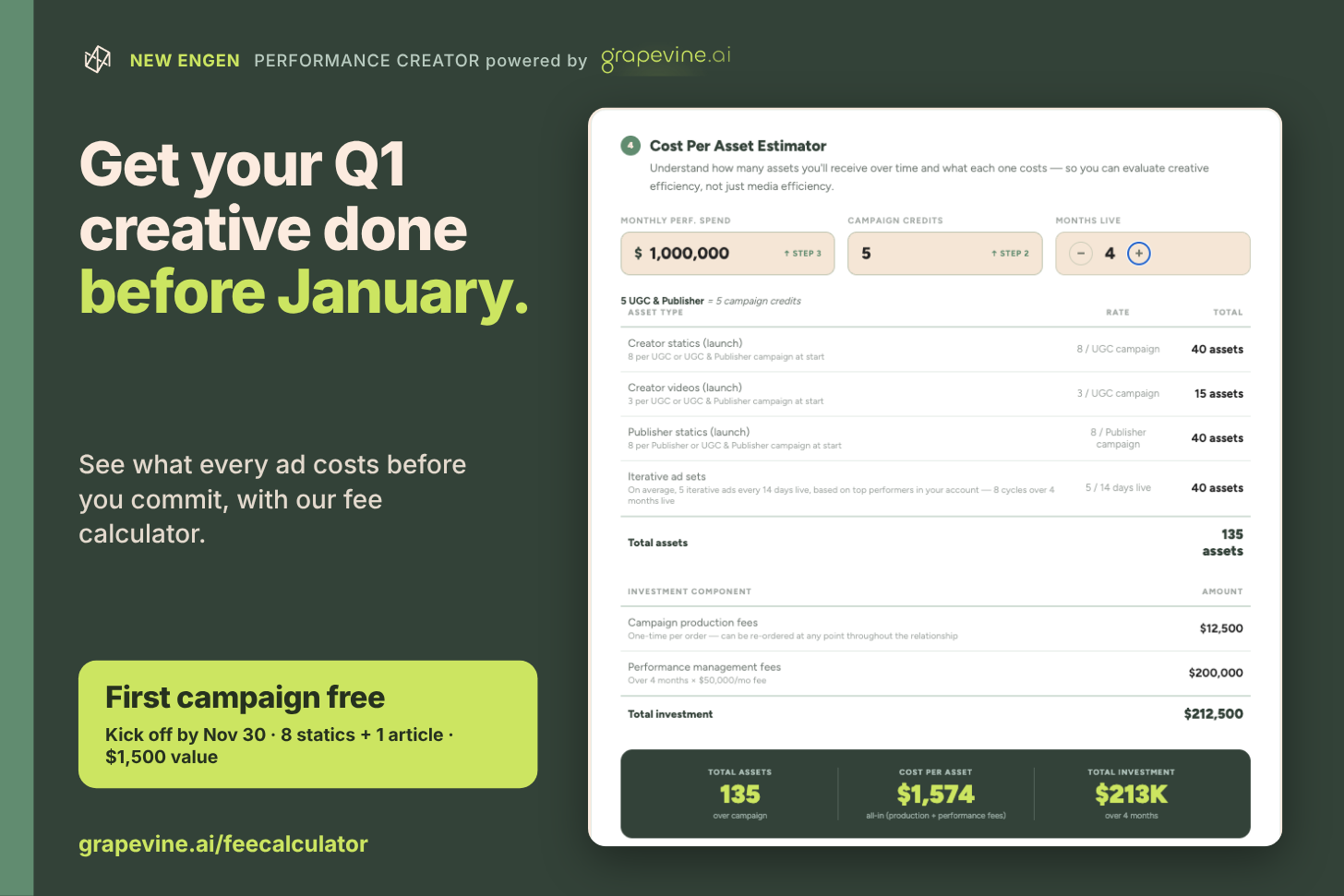
If your Meta account has stalled, another month of the same creative gives you little new to work with.
Grapevine, now part of New Engen, produces creator ads you can run through creators’ accounts, with production handled for you.
- Approve angles and ship product. Grapevine books and pays creators, writes briefs, and edits in-house.
- Get fresh creative in under 30 days from kickoff, giving you time to test before January.
- Start with flexible pricing and no minimum spend, then test month to month before committing further.
Futurhealth runs over 40% of its account on Grapevine assets and improved CPA by more than 15%. To budget for your own test, check your cost per asset in the fee calculator.
Kick off by November 30 and your first campaign is free: 8 statics and 1 article worth $1,500. Head into Q1 with fresh creative ready to put to work.
💡 Where ChatGPT Gets Its Facts; And How Your Brand Gets In
ChatGPT can learn about your brand from more than one place.
The strongest visibility strategy is making sure your information is accurate wherever AI may encounter it.
Here’s where the information comes from.
1️⃣ Training Data Shapes What ChatGPT Already Knows: Public webpages can contribute to future model training unless access is blocked.
That makes clear, useful, crawlable brand content valuable even before someone actively searches for you.
2️⃣ Your Own Website Matters During Search: When ChatGPT searches the web for brand-specific questions, company websites are often an important source.
Make prices, specifications, policies, support information, and product details easy to find in plain text. Also ensure OpenAI’s search crawler can access the pages you want cited.
3️⃣ Keep Business Information Current: OpenAI’s Business Hub can help businesses manage details and product information while providing visibility into mentions, clicks, and topics associated with their site.
Keeping these details accurate reduces the chance of outdated information appearing in answers.
4️⃣ Third-Party Sources Shape Brand Perception: Reviews, comparison articles, forums, publications, and “best X” lists can influence what ChatGPT says about a company.
In many cases, your brand may appear because another website mentioned you rather than because your own site was cited.
5️⃣ Track Where AI Learns About Your Category: Search the questions your buyers ask and note which external sources ChatGPT repeatedly cites.
Those are the publications, communities, and comparison pages where stronger brand presence may matter most.
Why It Works
AI answers combine information from multiple sources.
Consistent brand facts across owned and third-party content make it easier for systems to understand who you are and what you offer.
The Takeaway
Don’t optimize only your website.
Make sure ChatGPT hears the same accurate story about your brand everywhere it looks.
💡 See How Visible Your Brand Really Is In AI Search
AI search visibility is becoming a new layer of brand discovery.
Conductor’s AI Visibility Analysis tool helps you see where your brand appears, which pages get cited, and where competitors are gaining ground.
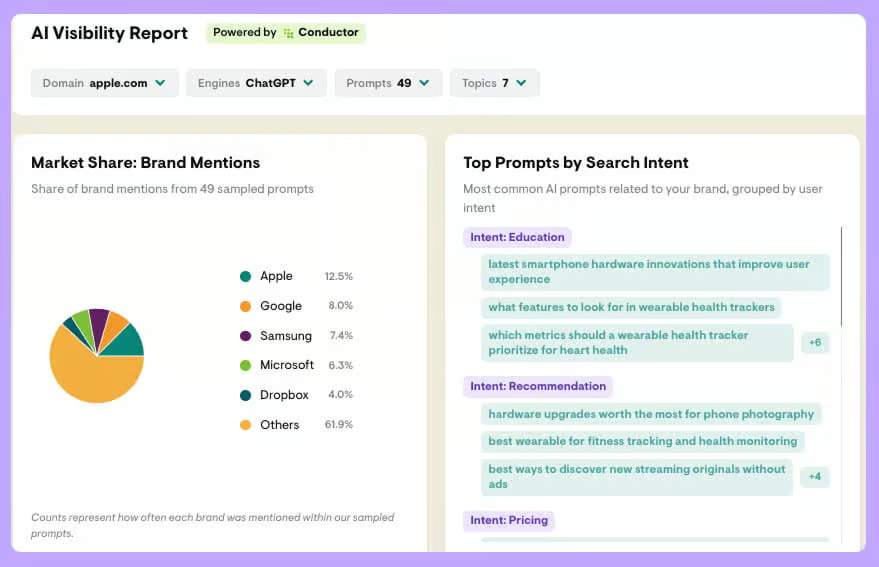
Here’s how to use it.
1️⃣ Run Your Website Through Conductor: Open Conductor’s AI Visibility Analysis tool, enter your company website and work email, then submit the request.
Conductor will send the finished report to your inbox.
2️⃣ Check Your AI Market Share: Review how often your brand appears compared with competitors.
This gives you a clearer view of whether AI platforms are consistently surfacing your brand within the category.
3️⃣ Review Funnel Visibility: See where your brand appears across different search intents and stages of the buyer journey.
This can reveal whether you are strongest in awareness, consideration, or more purchase-focused prompts.
4️⃣ Find Your Most-Cited Content: Look at the exact pages AI systems are already referencing.
These pages can show which topics, formats, and content structures are helping your brand earn visibility.
5️⃣ Check Brand Sentiment: Review how AI systems describe your brand and whether the overall perception is positive or negative.
You can also use Ask Conductor to dig deeper into gaps, strengths, and opportunities.
Why It Works
AI visibility is difficult to improve if you don’t know where you already appear.
A structured report helps connect mentions, citations, intent, competitors, and sentiment in one place.
The Takeaway
Don’t treat AI visibility like a black box.
Measure where you appear, identify what already works, and focus your next moves on the gaps with the biggest upside.
As we prepare more "Growthful" content, we'd love to hear your thoughts on today's edition! Feel free to share this with someone who would appreciate it. 🥰