Front Load Or Vanish
🧠 Write for extraction or vanish, as browsing becomes a habit.

Hey there 🧠
Ready for another day of staying ahead of the competition in the Growth race?
Oh and before we go ahead! If your friend sent this to you, be sure to subscribe here! So you don’t miss out on any editions.
Partnership with Modash
Your Affiliate Program Might Be Profitable on Paper. That Doesn’t Mean It Works.
You launch an affiliate program. A few creators join. Some sales come in. Then growth plateaus.
Not because affiliate doesn’t work, but because the math, structure, and incentives were never designed to compound.
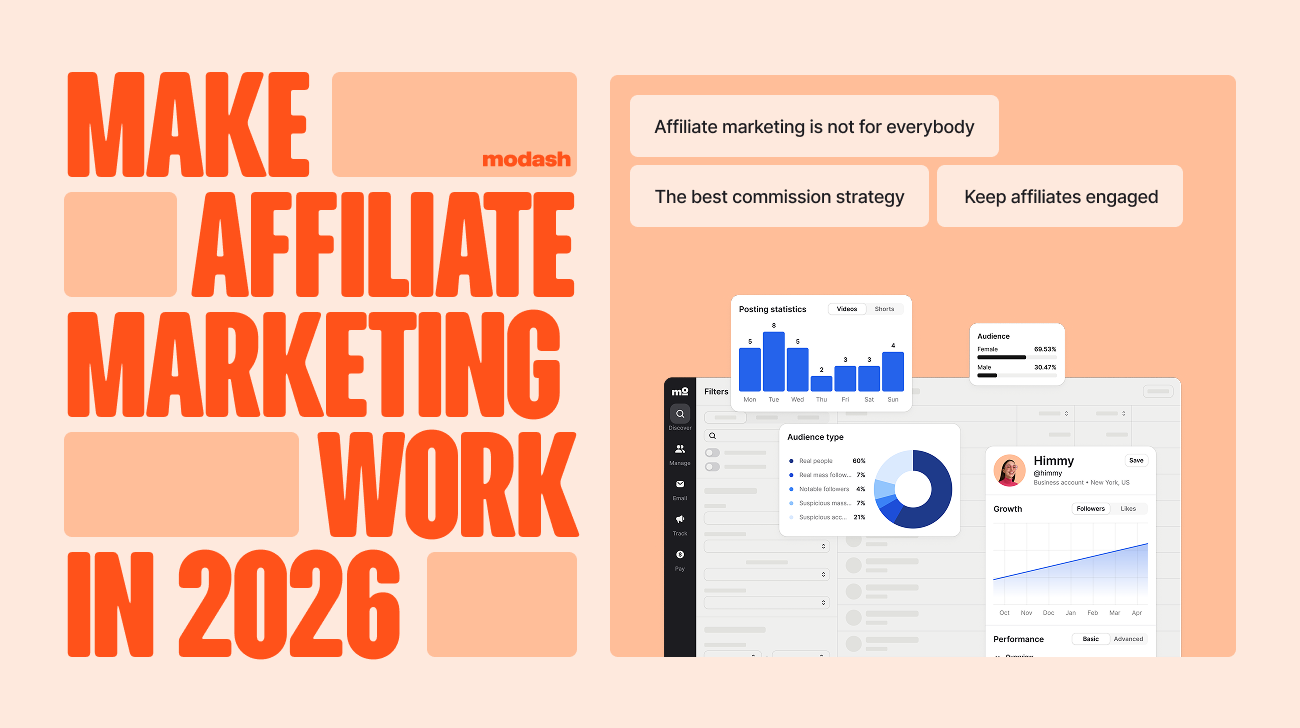
Modash just released the complete A-Z guide to building an affiliate program that actually holds up under scale.
Inside, you’ll discover:
- Why commission rates mean nothing without understanding margin compression
- How most tier systems accidentally demotivate top affiliates
- How code leakage and cookie gaps quietly distort attribution
This isn’t a surface-level playbook. It’s built from working with thousands of creators and real-world programs.
If you’re building affiliate as a real growth channel in 2026?
💡 How Does AI Actually Read Your Content
AI does not read like humans. It scans, extracts, and resolves.
An analysis of 1.2 million ChatGPT responses reveals a consistent pattern in how AI selects sources. If you are writing like a novelist, you may be invisible. If you write like a journalist, you increase your odds of being cited.
Here is what the data shows.
1️⃣ Front Load The Important Information: Forty four percent of citations come from the first 30 percent of a page. If your key insights appear deep in the article, AI is significantly less likely to surface them. Lead with definitions, key points, and direct answers.
2️⃣ Use Definitive Language: Cited content frequently uses declarative phrasing such as “is defined as.” Clear, structured statements create stronger subject to definition links, making it easier for AI systems to extract and summarize accurately.
3️⃣ Mirror User Questions In Headings: Content that includes literal questions, especially in H2 headings, is far more likely to be cited. Around 78 percent of cited question based content appears in structured headings that directly reflect user queries.
4️⃣ Increase Entity Specificity: Highly cited content contains a higher density of named entities. Specific brands, tools, frameworks, and proper nouns reduce ambiguity. Specificity signals authority and clarity to retrieval systems.
5️⃣ Maintain Balanced, Business Grade Tone: AI prefers structured, fact-driven writing with moderate subjectivity. Avoid extreme emotional language. Present facts clearly, then briefly explain their application.
The Takeaway
AI prioritizes clarity, structure, and front-loaded answers. If you want to be cited, write for extraction, not suspense. The brands that adapt to how machines retrieve information will dominate visibility in AI-driven search.
💡 Online Shopping Happens More Often Than You Think
Insights from stackedmarketer
Window shopping did not disappear. It moved to the couch.
Digital browsing has become a weekly ritual. Consumers are not only shopping when they need something. They are scrolling for entertainment, inspiration, and possibility.
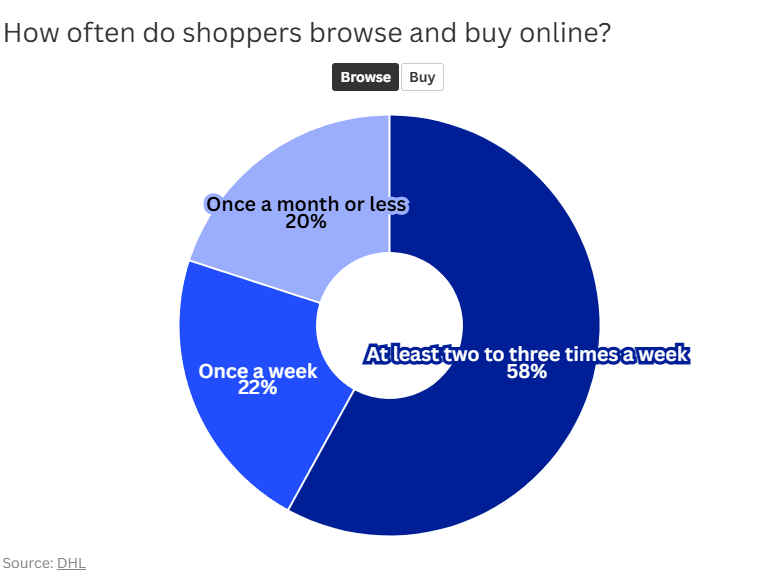
Here is what the data reveals.
1️⃣ Browsing Is A High Frequency Habit: Fifty-eight percent of shoppers browse products two to three times per week. Another 22 percent browse at least once weekly. That means roughly 80 percent of your audience is actively scanning products every single week.
2️⃣ Low Frequency Shoppers Are The Minority: Only 20 percent of consumers browse once a month or less. Occasional browsing is no longer the norm. Frequent exposure is.
3️⃣ Discovery Is Now Entertainment: For many users, product exploration fills the same role as social media scrolling. Your storefront competes not only with competitors but with content.
4️⃣ Freshness Drives Action: High-frequency browsing demands constant refresh. Use new arrival tags, rotating collections, and limited-time drops to create urgency. Without a visible change, frequent browsers have no trigger to convert.
5️⃣ The Path To Purchase Is Nonlinear: Consumers may browse dozens of times before buying. Each interaction builds familiarity. Brands that show up consistently during these micro visits increase the odds of conversion.
The Takeaway
Online shopping is no longer occasional. It is habitual. If 80 percent of your audience is browsing weekly, your digital storefront must evolve just as often. Visibility and freshness are no longer advantages. They are requirements.
As we prepare more "Growthful" content, we'd love to hear your thoughts on today's edition! Feel free to share this with someone who would appreciate it. 🥰