Fix These Five Attribution Gaps
💡 See why your dashboard may be misreading B2B demand, then turn existing product assets into scalable video creative.

Hey there 🧠
Ready for another day of staying ahead of the competition in the Growth race?
Oh and before we go ahead! If your friend sent this to you, be sure to subscribe here! So you don’t miss out on any editions.
In Partnership with Omnisend
Your next customer already follows you. Stay in touch.

Someone follows your brand on Instagram because they like what you’re selling. But when your next launch or sale comes around, they might never see it.
Omnisend’s Instagram integration helps you capture that interest while it’s fresh. Social Capture automatically DMs anyone who comments or messages a keyword you’ve chosen, asking for their email.
Offer a discount to give them a reason to subscribe. Their email goes straight into your Omnisend list, ready for a welcome series that helps bring them closer to their first order.
No copying contacts or manually chasing replies. Social Capture is available on all paid plans.
New to Omnisend? Its e-commerce email and SMS platform is trusted by 150,000+ brands. Migration is free and takes up to five business days.
Give today’s interested followers a way to hear about tomorrow’s offer.
💡 Your B2B Attribution May Be Breaking In More Places Than You Think
A channel can influence pipeline long before your CRM gives it credit.
If your reporting starts too late or relies too heavily on last-touch attribution, strong demand-generation channels can look weaker than they really are.
Here’s where to check.
1️⃣ Your Reporting Starts Too Late: Buyers may see ads, posts, and brand activity for months before filling out a form.
If reporting begins only at lead capture, upper-funnel influence disappears from the journey.
2️⃣ Sales And Marketing See Different Funnels: Marketing may optimize for MQLs while sales focuses on accounts most likely to close.
Bring both teams into one account-level view showing engagement, buying-group activity, and pipeline stage.
3️⃣ Last Touch Gets Too Much Credit: A buyer may first discover you through LinkedIn, then convert through search weeks later.
Last-touch attribution gives the final channel the win and ignores what created demand earlier.
4️⃣ Your Data Lives In Too Many Places: Ad platforms, CRM systems, email tools, and web analytics often tell separate stories.
Combine them into one company-level journey so budget decisions are based on current, connected data.
5️⃣ Your Reporting Looks Backward: Quarterly recap slides explain what already happened.
Use engagement signals to identify accounts gaining momentum and act before they formally enter the pipeline.
Why It Works
B2B buying journeys are long, multi-touch, and account-based.
A stronger attribution system connects early influence with eventual pipeline instead of rewarding only the final interaction.
The Takeaway
Don’t trust attribution until you’ve tested the measurement itself.
Fix the journey view, then validate channel impact with holdout testing where possible.
💡 How to turn product photos into high-converting video ads with OpenArt
Creating video ads usually takes scripts, editing, design, and multiple tools.
OpenArt’s Product Ads tool simplifies that process by turning a product photo or product link into a finished video ad with consistent branding.
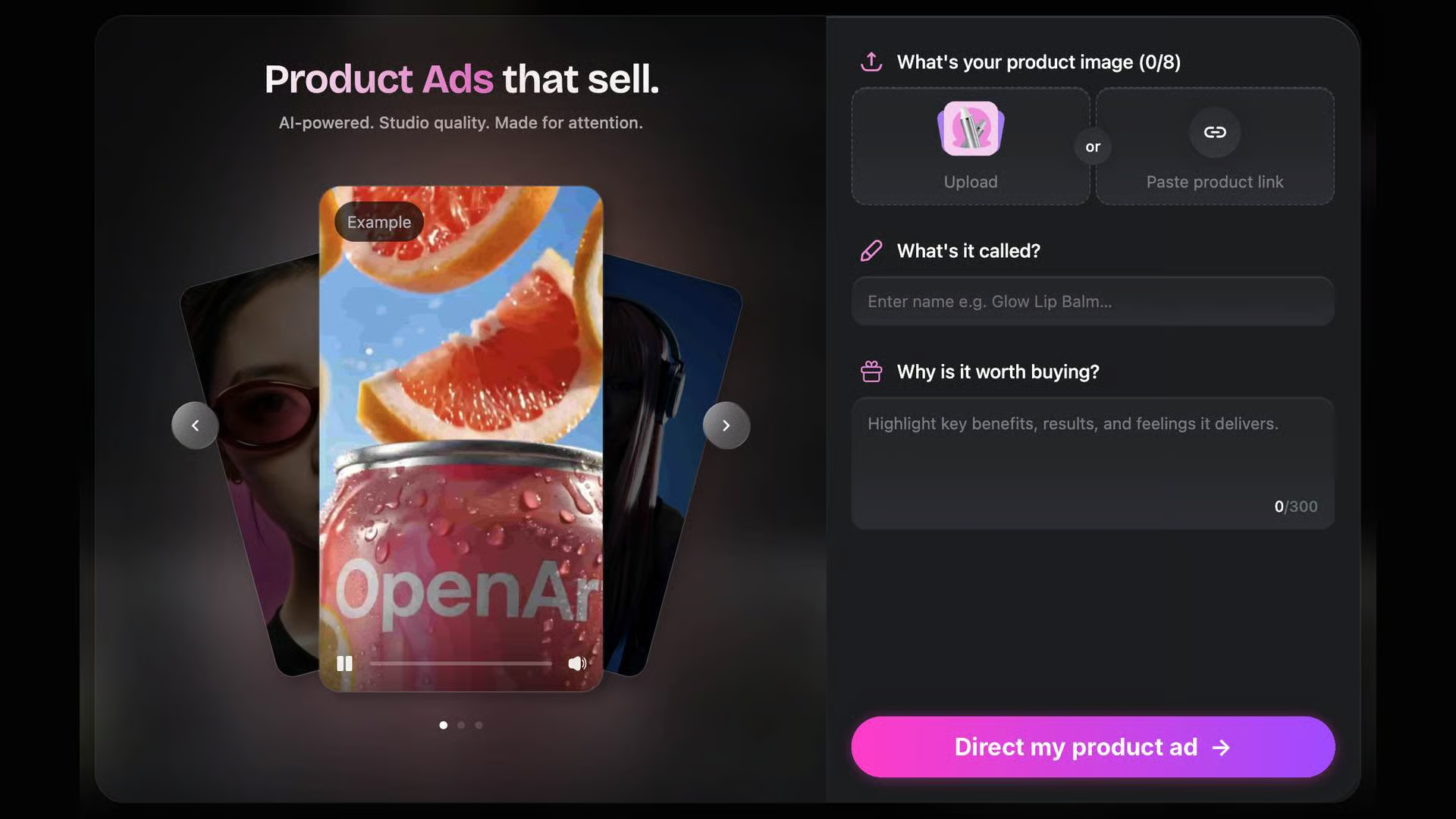
Here’s how to use it.
1️⃣ Open Product Ads: Go to OpenArt’s Product Ads tool and start a new project for the product you want to promote.
2️⃣ Upload your product input: Add a product photo or paste a link to the product page.
This gives the tool the visual and product context it needs to build the ad.
3️⃣ Add the core product details: Enter the product name and the main value proposition.
Be clear about the biggest reason someone should care, because that message will shape the hook and story.
4️⃣ Let OpenArt generate the ad: Once submitted, the AI agent builds the video ad for you.
It handles the key pieces, including the hook, the narrative flow, the scene structure, transitions, and audio.
5️⃣ Review the finished output: The result is a polished video ad designed to keep your product, logo, and brand colors visually consistent across the full video.
That makes it easier to produce ad creative without starting from scratch every time.
6️⃣ Ask for variations: If you want more options, use chat to request changes.
You can ask for a stronger hook, a different format, or even a UGC-style version to test alternate creative angles.
Why It Works
Most product ads fail because production is slow and testing takes too much effort.
A tool like this shortens the path from product image to finished ad, making creative testing much easier.
The Takeaway
If you already have product photos, you already have the raw material for video ads.
OpenArt helps turn them into faster, more scalable creative output.
As we prepare more "Growthful" content, we'd love to hear your thoughts on today's edition! Feel free to share this with someone who would appreciate it. 🥰