Bad News Sells Better
🎯 While negativity bias shapes how people perceive outcomes, reporting ensures your wins are actually seen.

Hey there 🧠
Ready for another day of staying ahead of the competition in the Growth race?
Oh and before we go ahead! If your friend sent this to you, be sure to subscribe here! So you don’t miss out on any editions.
Partnership with AirOps
Your buyers moved to AI search. Your content didn't follow.
52% of adults now research on ChatGPT, Gemini, and Perplexity. Those visitors convert at 4.4x the rate of organic search, and 83% of the citations they see go to pages updated in the last 12 months.
You're not losing to better content. You're losing to better structure, fresher pages, and off-site signals you haven't touched yet.
AirOps analyzed 15M+ AI queries and built the playbook content teams are using to close that gap right now. Inside you’ll find:
- Structural patterns that make your content easy for AI engines to extract and cite
- Refresh cadences and off-site signals that keep you visible as algorithms shift
- Team models and a 90-day action plan you can run this Quarter.
Teams at Carta, Ramp, Webflow, and Klaviyo are already running this playbook to win AI search visibility and pipeline.
💡 Why One Bad Review Matters More Than Fifty Good Ones
You can get dozens of positive signals, but one negative experience sticks harder, lasts longer, and influences decisions more strongly. That is negativity bias. It is not irrational; it is how the brain is wired. And in marketing, this bias shapes how people evaluate products, content, and brands.
Here’s how it actually works.
1️⃣ Negative Signals Carry More Weight: People remember and react to negative experiences far more than positive ones. A single bad review can outweigh dozens of good ones in perception.
2️⃣ Attention Is Drawn To Threats First: Users instinctively look for risks before benefits. That is why they scan 1-star reviews before reading testimonials.
3️⃣ Lead With The Problem, Not The Promise: Campaigns that highlight pain points or frustrations grab attention faster than those focusing only on benefits.
4️⃣ Use Loss Framing To Drive Action: Messages showing what users are missing or losing are more effective than highlighting potential gains. Loss feels more urgent than reward.
5️⃣ Make The Threat Specific: Naming exact problems or risks makes them feel real. Brands that clearly define what to avoid build stronger trust and urgency.
6️⃣ Position Your Product As The Solution: Once the problem is clear and felt, your product naturally becomes the answer without needing aggressive selling.
The Takeaway
People are wired to notice what could go wrong before what could go right. Instead of ignoring this, use it. Highlight real problems, make risks clear, and position your product as the solution. Done right, this builds trust and drives action.
💡 Why Skipping Reports Quietly Kills Client Retention
You might have a great relationship with your client. Calls feel smooth, feedback is positive, and everything seems on track. But the moment you stop showing your work, doubt starts creeping in. And that is where churn begins.
Here’s why reporting matters more than you think.
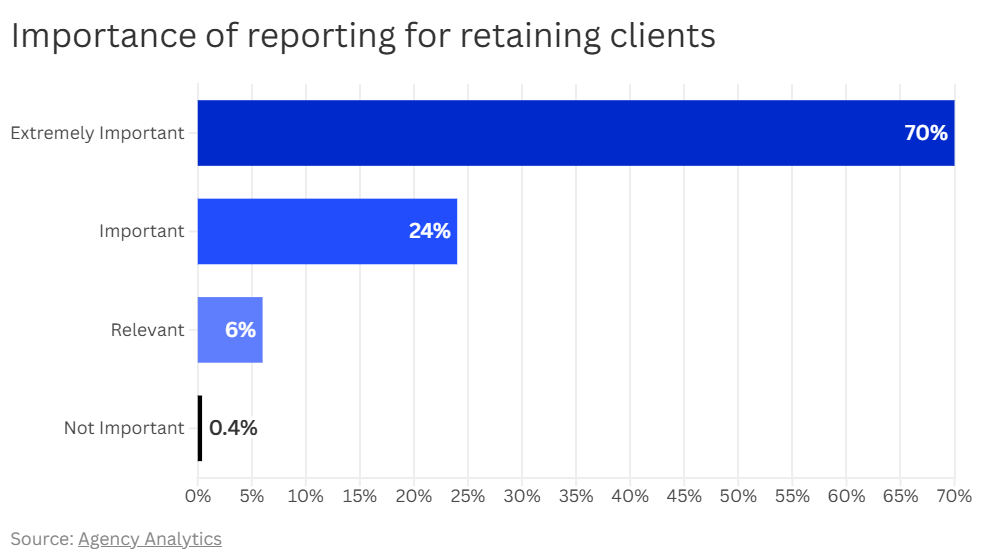
1️⃣ Reporting is Non-Negotiable: Over 70% of agencies say reporting is extremely important for retention, and almost everyone else agrees it matters. Ignoring it is not an option.
2️⃣ Silence Creates Doubt: When clients do not see clear updates, they assume nothing is happening. Even strong performance gets overlooked without visibility.
3️⃣ Reports Act As Proof Of Work: Regular reporting shows progress, effort, and results. It justifies the retainer and reinforces trust every month.
4️⃣ Transparency Builds Confidence: Consistent updates reduce uncertainty and strengthen the relationship. Clients feel informed and in control.
5️⃣ Format Matters As Much As Content: Sending a static report is not enough. It often gets ignored or skimmed without impact.
6️⃣ Add A Human Layer: Pair reports with a Loom video summary. Explaining results in your own voice makes the data more engaging and harder to ignore.
7️⃣ Make It Easy To Understand: Focus on clear insights and outcomes, not just raw numbers. Clients care about what changed and why it matters.
The Takeaway
Good work is invisible without communication. Reporting is not just a task, it is your proof of value. Show your work clearly and consistently, or risk losing clients who simply cannot see it.
As we prepare more "Growthful" content, we'd love to hear your thoughts on today's edition! Feel free to share this with someone who would appreciate it. 🥰