Authenticity Beats Automation
📊 As AI becomes powerful enough to act, authenticity becomes more important than ever.

Hey there 🧠
Ready for another day of staying ahead of the competition in the Growth race?
Oh and before we go ahead! If your friend sent this to you, be sure to subscribe here! So you don’t miss out on any editions.
In Partnership with Alison
Your creative cleared every internal check and failed every platform one.
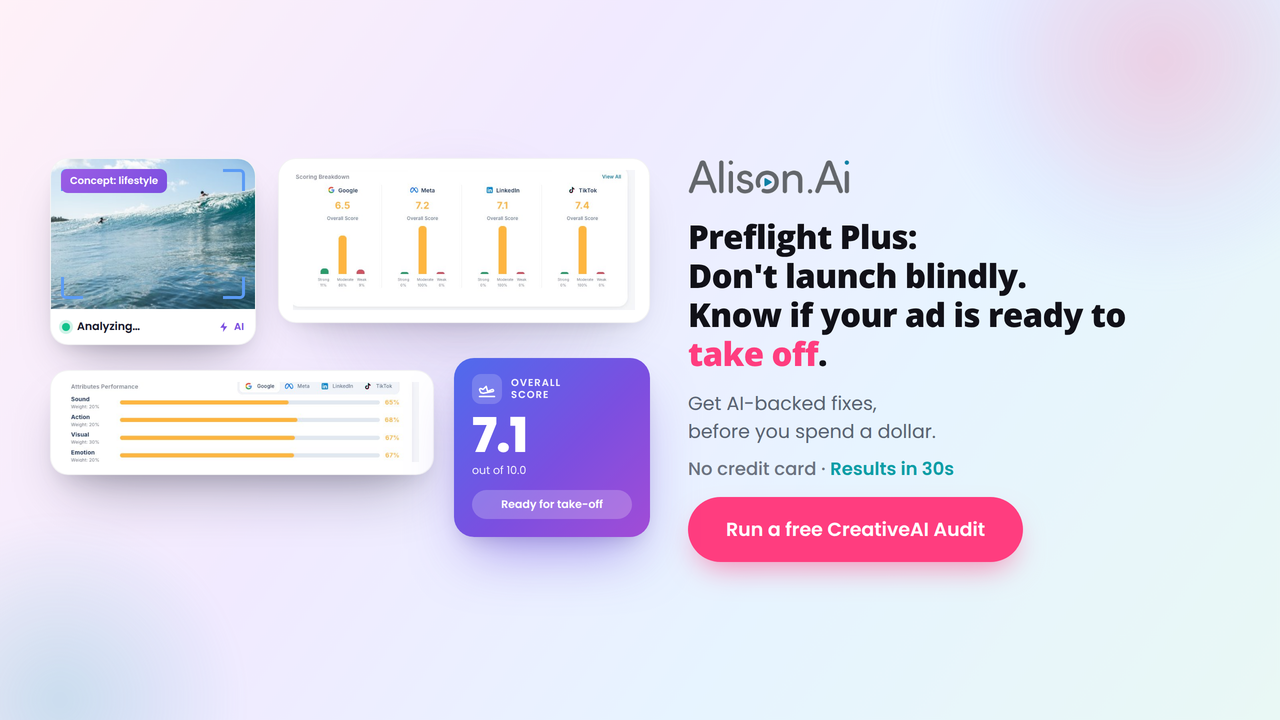
Everyone reviewed the creative, everyone signed off, and it still tanked because nobody was checking the right things. The worst part is it was all fixable before it ever went live.
Alison.ai's Preflight Plus scores your video against Meta, Google, TikTok, and LinkedIn frameworks in 30 seconds before a single dollar leaves your account. You get an Adherence Score plus specific, actionable fixes so only your strongest assets ever see paid media.
- Ferrara caught a weak hook in pre-flight and walked away with 84% more 3-second views.
- Tango audited before spending a dollar and saw IPM lift 56% on launch day.
- Murka rebuilt fatigued creatives using audit insights and pulled 68% higher ROAS on every new concept.
One upload. Thirty seconds. You'll know exactly what's broken and how to fix it.
Run your free CreativeAI Audit now - no credit card needed.
💡 Why AI-Written Emotional Messages Backfire
Insights from sciencesays
AI is great at writing fast, clean, and structured content. But when it comes to emotional communication, speed can become a liability.
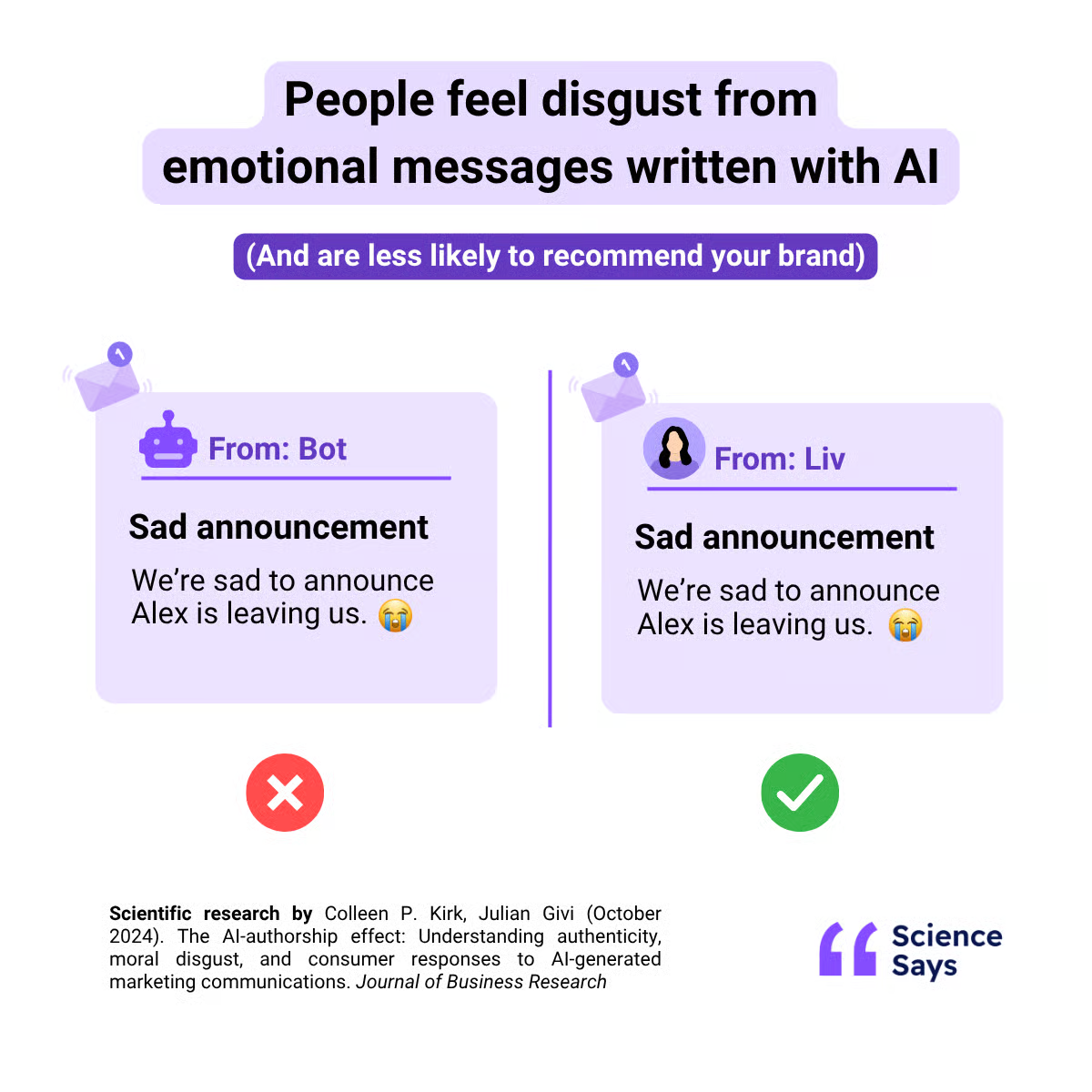
Because people don’t just read emotional messages. They judge them.
Here’s what’s really happening.
1️⃣ People Expect Real Emotion In Sensitive Moments: When brands communicate pride, empathy, or apology, people expect a human behind the message. Anything else feels off.
2️⃣ AI Breaks Perceived Authenticity: When users discover a message is written by AI, it immediately feels less genuine. Even if the wording is perfect, the intent feels artificial.
3️⃣ Emotional Messages Trigger Moral Judgement: People don’t just dislike AI-written emotions. They feel it is dishonest. This creates a stronger negative reaction compared to normal dissatisfaction.
4️⃣ Attribution Matters More Than Content: The same message can perform very differently depending on who wrote it. If it is perceived as human, it builds trust. If AI-generated, it reduces credibility.
5️⃣ Fake Personalization Backfires Harder: Signing an AI-written emotional message with a human name increases negative reactions even more. It feels deceptive rather than thoughtful.
6️⃣ Factual Messages Are Safer With AI: AI works well for neutral or informational communication. The problem arises when it tries to simulate human emotion.
7️⃣ Support AI, Don’t Replace Humans: Using AI for grammar, structure, or clarity is effective. But the core emotional message should come from a real human voice.
The Takeaway
AI can replicate language, but not authenticity. In emotional moments, people are not evaluating the message. They are evaluating the intent behind it. And that is something AI cannot fake convincingly.
💡 How To Turn AI Into Your Personal Operator
Most people use AI to generate answers. But the real shift is happening when AI starts doing the work for you instead of just suggesting it.
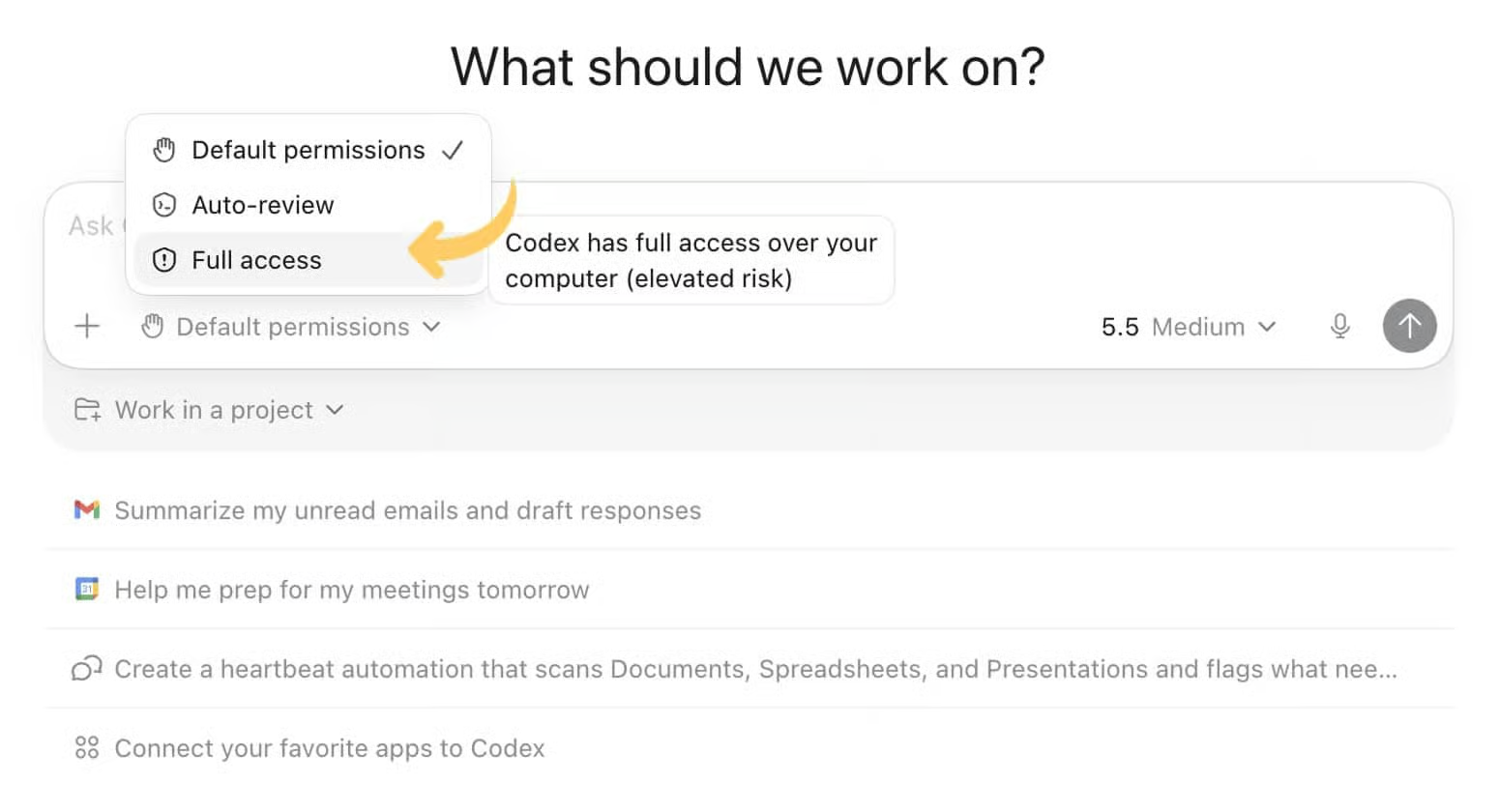
That’s where tools like Codex come in.
Here’s how to use it effectively.
1️⃣ Move From Prompts To Actions: Instead of asking AI what to do, you tell it what to execute. This shifts AI from an assistant to an operator.
2️⃣ Enable System-Level Access Carefully: Granting access allows Codex to interact with apps, files, and workflows directly. This is what unlocks automation across tasks.
3️⃣ Define Tasks Clearly And Step By Step: The more specific your instruction, the better the outcome. Clear inputs reduce errors and improve execution quality.
4️⃣ Automate Repetitive Workflows: Tasks like organizing files, updating spreadsheets, or testing websites can run automatically without manual effort.
5️⃣ Add A Review Layer Before Final Actions: Always ask Codex to summarize results and confirm before making major changes. This keeps you in control.
6️⃣ Use It Across Multiple Tools Seamlessly: Codex can connect actions across apps, turning scattered workflows into one continuous process.
7️⃣ Treat It As A System, Not A Tool: The biggest advantage comes when you design repeatable workflows that Codex can execute consistently.
The Takeaway
AI is no longer just about generating output. It is about executing tasks. The real leverage comes when you stop doing repetitive work yourself and start building systems that do it for you.
As we prepare more "Growthful" content, we'd love to hear your thoughts on today's edition! Feel free to share this with someone who would appreciate it. 🥰