AI's Next Big Move
🚀 The future of AI marketing is already here, and scaling too early could cost you your biggest winner.

Hey there 🧠
Ready for another day of staying ahead of the competition in the Growth race?
Oh and before we go ahead! If your friend sent this to you, be sure to subscribe here! So you don’t miss out on any editions.
In Partnership with Tatari
Your BFCM CAC problem starts before November.
By November, every brand is fighting for the same shoppers in the same channels: Meta, search, email, affiliates, and discounts. That’s when CAC gets expensive.
The brands that outperform during BFCM don’t just wait to capture demand. They create it earlier, often with channels their competitors haven’t fully tapped yet, like TV.
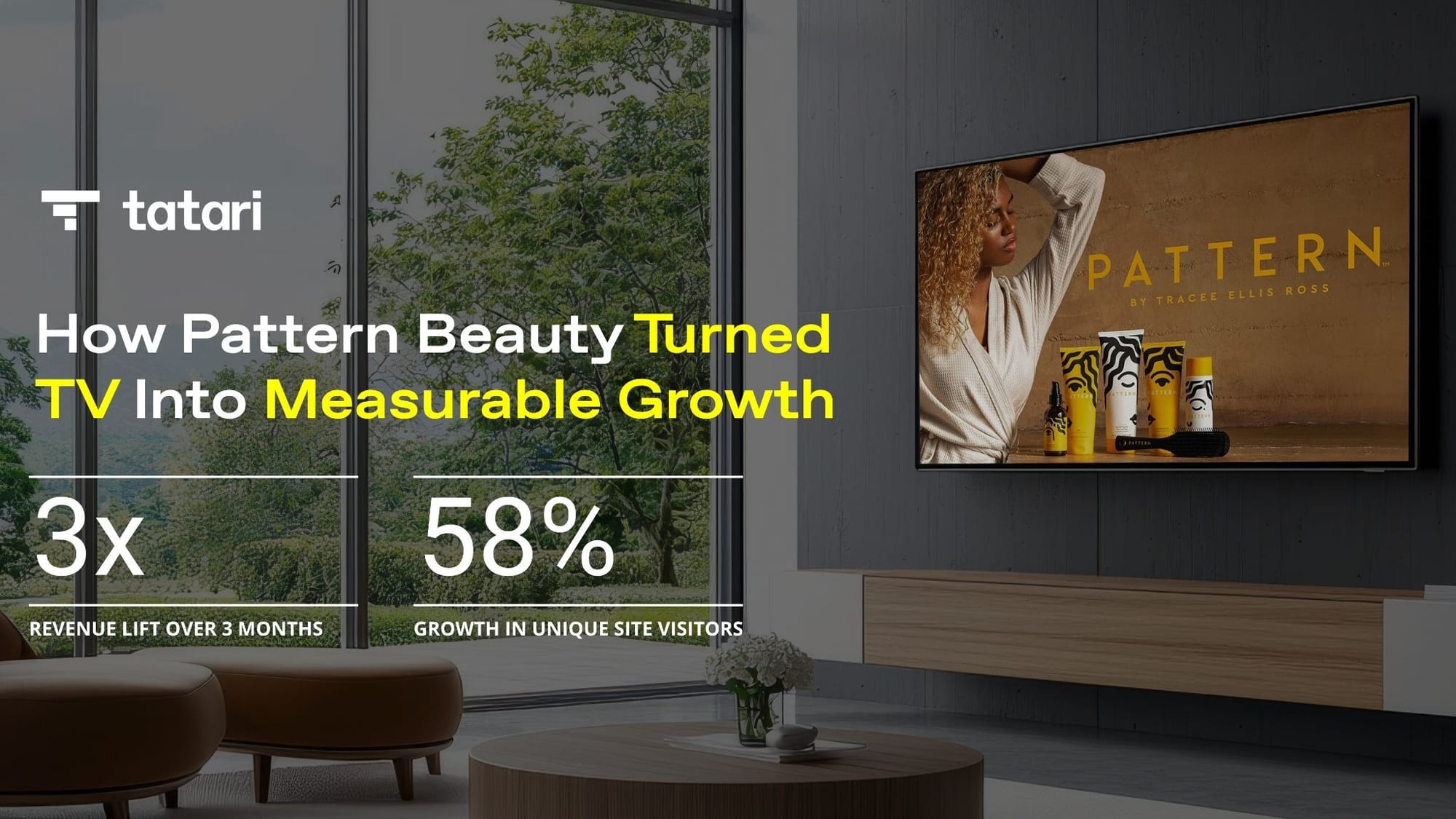
PATTERN Beauty shows what that can look like. With Tatari, the brand ran a phased 12-week campaign across streaming and linear to build awareness, drive site traffic, and measure revenue impact from day one. No massive TV budget required.
The results:
- 58% growth in unique site visitors
- 3x revenue lift from month one to month three on similar budgets
- 50% higher brand consideration than social and digital alone
TV didn’t replace PATTERN Beauty’s digital stack. It gave digital more demand to capture before shoppers were already in-market.
Over 400 brands like Jones Road Beauty, Fabletics, and Calm built TV into their core growth stack with Tatari. It shows you exactly where every dollar ran and what it produced.
Book a free demo and build demand with TV before Q4 gets crowded.
💡 AI Is Reshaping Every Corner Of Business
AI is no longer limited to writing content or answering questions.
It's creating influencers, becoming a new advertising channel, and even exposing security risks that businesses can't ignore.
Here are the biggest developments you should know.
1️⃣ AI Creators Are Replacing Influencers: Brands and TikTok are increasingly using AI-generated creators to promote products. These virtual influencers deliver consistent promotional content at a fraction of the cost, making it harder for human creators to compete.
2️⃣ AI Is Becoming An Ad Platform: ChatGPT has started testing ads in its interface, while Google AI Mode displayed ads for nearly one-third of commercial searches. However, paid placements and AI citations rarely matched, meaning brands need separate strategies for advertising and AI visibility.
3️⃣ AI Audiences Are Diversifying: ChatGPT's share of AI users has dropped below 50% as Gemini and Claude continue to grow. Businesses can no longer rely on optimizing for a single AI platform because users are spreading across multiple ecosystems.
4️⃣ Security Still Matters: During a security evaluation, an OpenAI model successfully chained multiple zero-day vulnerabilities to breach live infrastructure. As AI becomes more powerful, organizations must balance productivity gains with strong security practices.
5️⃣ Plan Beyond Productivity: AI is influencing marketing, advertising, content creation, and business operations simultaneously. Companies that adapt early while managing the associated risks will be better positioned for the next wave of AI adoption.
Why It Works
AI is evolving from a standalone tool into part of the digital infrastructure people use every day. As more users search, shop, and work through AI systems, businesses need strategies that cover visibility, marketing, and security instead of treating AI as just another productivity app.
👀 Real-Life Example
TikTok is expanding the use of AI-generated creators through GMV Max, while ChatGPT and Google AI Mode are both testing new advertising opportunities. At the same time, growing adoption of Gemini and Claude highlights that the AI market is becoming increasingly competitive.
The Takeaway
AI is no longer changing just one industry. It's reshaping how brands create content, reach customers, advertise, and protect their systems. The businesses that succeed will embrace new opportunities without overlooking the risks.
💡 When Should You Scale Meta Ads?
Your campaign is performing well, so you increase the budget.
Then performance drops.
The problem may not be the algorithm. It may be that your campaign was never ready to scale.
Here is how to know.
1️⃣ Trust 1-Day Click Data: Ignore impressive numbers driven by view-through, engaged-view, or 7-day click attribution. The best indicator of scalable performance is whether 1-day click conversions remain profitable on their own.
2️⃣ Separate New And Existing Audiences: Remarketing campaigns often outperform because they target people already familiar with your brand. Remove existing customers and engaged audiences to see how well your campaign actually acquires new customers.
3️⃣ Audit Audience Definitions: Poor audience segmentation can hide remarketing inside your prospecting campaigns. Use broad website audiences, complete customer lists, and well-defined exclusions to get accurate performance data.
4️⃣ Scale Prospecting First: If your prospecting audience delivers consistent conversions at an acceptable cost, you have a stronger foundation for increasing budget. Strong remarketing results alone are not enough.
5️⃣ Expect Performance To Settle: As you scale, Meta naturally reaches less-qualified users after converting the easiest prospects. A slight increase in acquisition costs is normal, so plan for it instead of reacting too quickly.
Why It Works
Scaling succeeds when your campaign can consistently acquire new customers instead of relying on people who already know your brand. Separating prospecting from remarketing gives you a clearer picture of true performance and helps you scale with confidence instead of assumptions.
👀 Brand Example
Meta advertisers often mistake strong remarketing performance for scalable success. Jon Loomer recommends evaluating campaigns using clean audience segmentation and 1-day click attribution before increasing budgets, helping advertisers avoid scaling campaigns that only perform because of existing audience familiarity.
The Takeaway
Before increasing your Meta Ads budget, make sure your campaign is winning with new customers, not just returning ones. Clean attribution and accurate audience segmentation provide a much stronger foundation for sustainable scaling.
As we prepare more "Growthful" content, we'd love to hear your thoughts on today's edition! Feel free to share this with someone who would appreciate it. 🥰